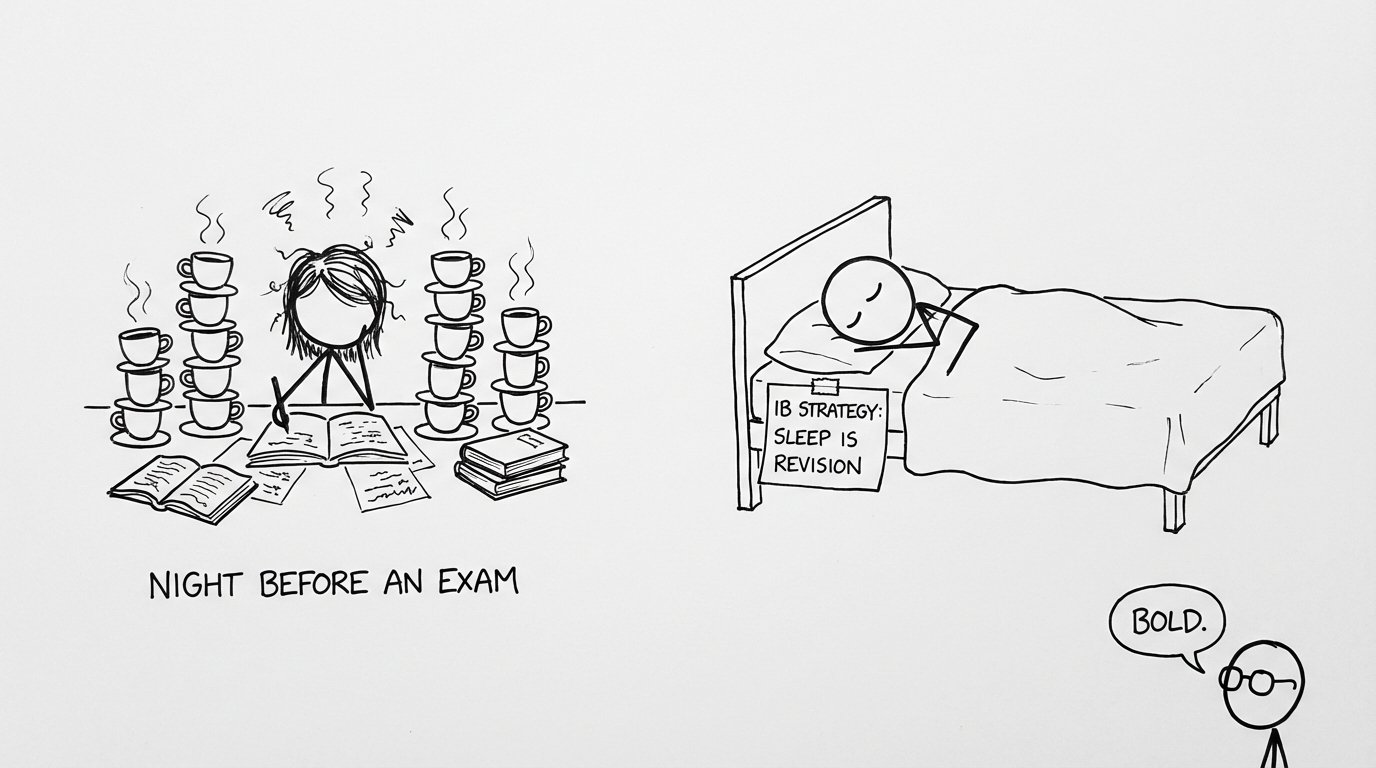
The night it finally hits you is usually quiet.
It's not the dramatic kind of panic where you throw books across the room. It's more subtle: you open your laptop, look at the calendar, and realize the IB doesn't care how motivated you feel. It only cares what you can do under a timer.
So you ask the question everyone asks: Is 4 hours of study enough for IB?
It's a fair question. It's also slightly dangerous, because it treats time like the main ingredient. In the IB, time matters, but it is not the thing that moves your grade. What moves your grade is the number of times you practice the exact behavior the exam rewards: retrieval, application, and clean technique.
If you have 4 hours, you can absolutely make progress in IB. But "enough" depends on when you're asking, what you do in those hours, and how you measure whether the hours are working.
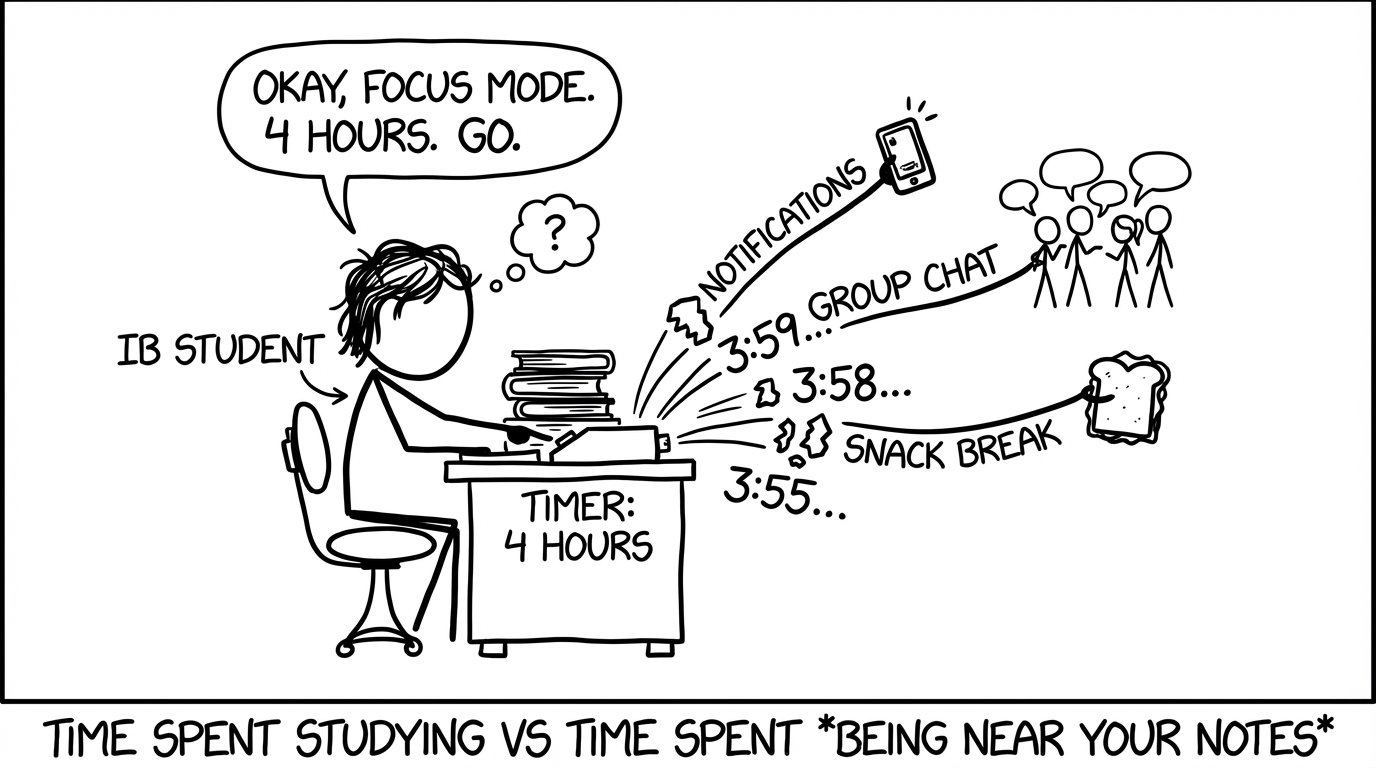
The quick answer: when 4 hours is enough for IB (and when it isn't)
Here's the honest version most IB students never get:
- 4 hours can be enough on a school day if you are already consistent and your sessions are practice-heavy.
- 4 hours is not enough if it's mostly rereading, rewriting notes, or "organizing" your study space.
- 4 hours can be plenty if you're 8–12 weeks out and using a smart loop that turns mistakes into mark gains.
- 4 hours might be too little in the final stretch if you're trying to rebuild entire subjects from scratch.
The better question isn't "Is 4 hours enough for IB?" It's: Is my 4 hours producing evidence? Evidence is timed accuracy, fewer repeated mistakes, and answers that match the markscheme logic.
If you want a broader hours framework, pair this article with How Many Hours Should IB Students Study? and How Long Should I Revise for Each IB Subject?.
A simple checklist: make your 4 hours count in IB
If your IB revision block is 4 hours, this is the checklist that keeps it real:
- Timer on, phone away (or in another room).
- At least 60% of the time on questions (not notes).
- Every block ends with marking + an error rule.
- At least one block is timed.
- You finish with spaced repetition (Flashcards) so tomorrow is easier.
RevisionDojo is built around this loop: Study Notes for clarity, Flashcards for retention, Questionbank for exam practice, AI Chat for fast explanations, and Grading tools to turn feedback into specific upgrades.
To see how the whole system fits together, start with RevisionDojo App: The Smarter Way to Prep for IB Exams and the RevisionDojo for IB hub.
Why "hours" misleads IB students
Most IB students don't run out of time. They run out of useful minutes.
A 4-hour session can be either:
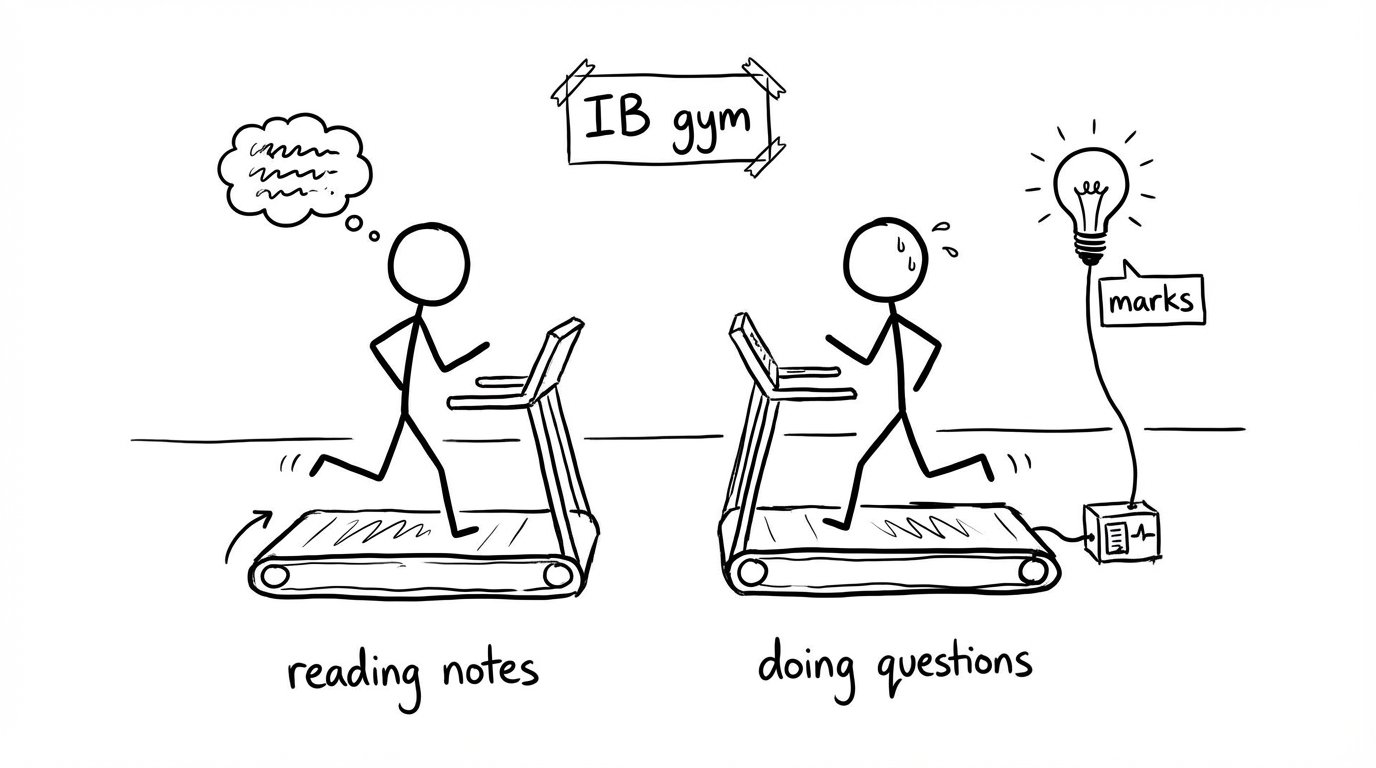
- 4 hours of gentle comfort (reading, highlighting, rewriting) that feels productive, or
- 4 hours of exam behavior (retrieval, timed practice, fixing mistakes) that becomes productive.
The IB rewards outputs: structured explanations, correct method, relevant evidence, and command-term accuracy. It does not reward effort the way a long hike rewards tired legs.
If you want to feel this difference quickly, do this once:
- Spend 30 minutes rereading a topic.
- Then do 10 exam-style questions on it.
The gap between what felt familiar and what you can actually produce is the IB skill gap. Closing that gap is what your 4 hours should do.
For a strong exam-season framework, keep How to Succeed in IB Exams: The 2026 Guide open as a reference.
The "4-hour IB plan" that actually works (with timings)
Below is a 4-hour structure you can repeat across subjects. It's designed to be boring in the right way: predictable, measurable, and hard to fake.
Block 1 (55 minutes): rebuild one micro-topic fast
- 10 min: skim the exact subtopic in IB Study Notes (don't expand the scope)
- 35 min: targeted Questionbank set (10–20 questions depending on subject)
- 10 min: mark + write 3 error rules
RevisionDojo makes this seamless because you can jump from Study Notes to Questionbank without changing platforms. If you need an example of exam-style drilling, explore a topic-specific Questionbank like B2.2 Organelles and compartmentalization -- IB Questionbank.
Break (10 minutes): protect the next hour
Drink water. Walk. No doom-scrolling. In IB, attention is an asset.
Block 2 (55 minutes): timed practice (the part that changes grades)
- 35–45 min timed section (one paper section or a mixed set)
- 10–20 min: mark ruthlessly and tag patterns
If you want to train realistic timing properly, use the walkthrough How to Run Timed IB Mock Exams in RevisionDojo (Exam Mode + Test Builder).
Break (10 minutes)
Block 3 (55 minutes): fix one repeating weakness
This is the grown-up part of IB revision: you stop doing more, and start doing better.
- Pick the most common error type (command term, method, missing evaluation, units, structure).
- Do a short Notes refresh.
- Do a smaller question set focused only on that error.
- Use AI Chat to ask: "What would earn full marks here, and why did mine lose marks?"
This is where RevisionDojo's AI Chat and Grading tools pay for themselves: they shorten the time between confusion and correction.
Block 4 (45 minutes): retention and calm
- 20 minutes: Flashcards (definitions, processes, quotes, formulas)
- 15 minutes: redo 3–5 questions you previously got wrong
- 10 minutes: plan tomorrow's first block
If you want a free starting point for building this routine, see Notes + Flashcards + Question Bank (Free).
How to tell if your 4 hours is enough for IB: three metrics
If you track nothing, you will rely on mood. The IB punishes mood-based planning.
Accuracy under time
Not "I understand it." Not "I could do it if I had longer."
Track your timed accuracy once or twice per week. If it rises steadily, 4 hours might be enough for IB right now.
Error repetition rate
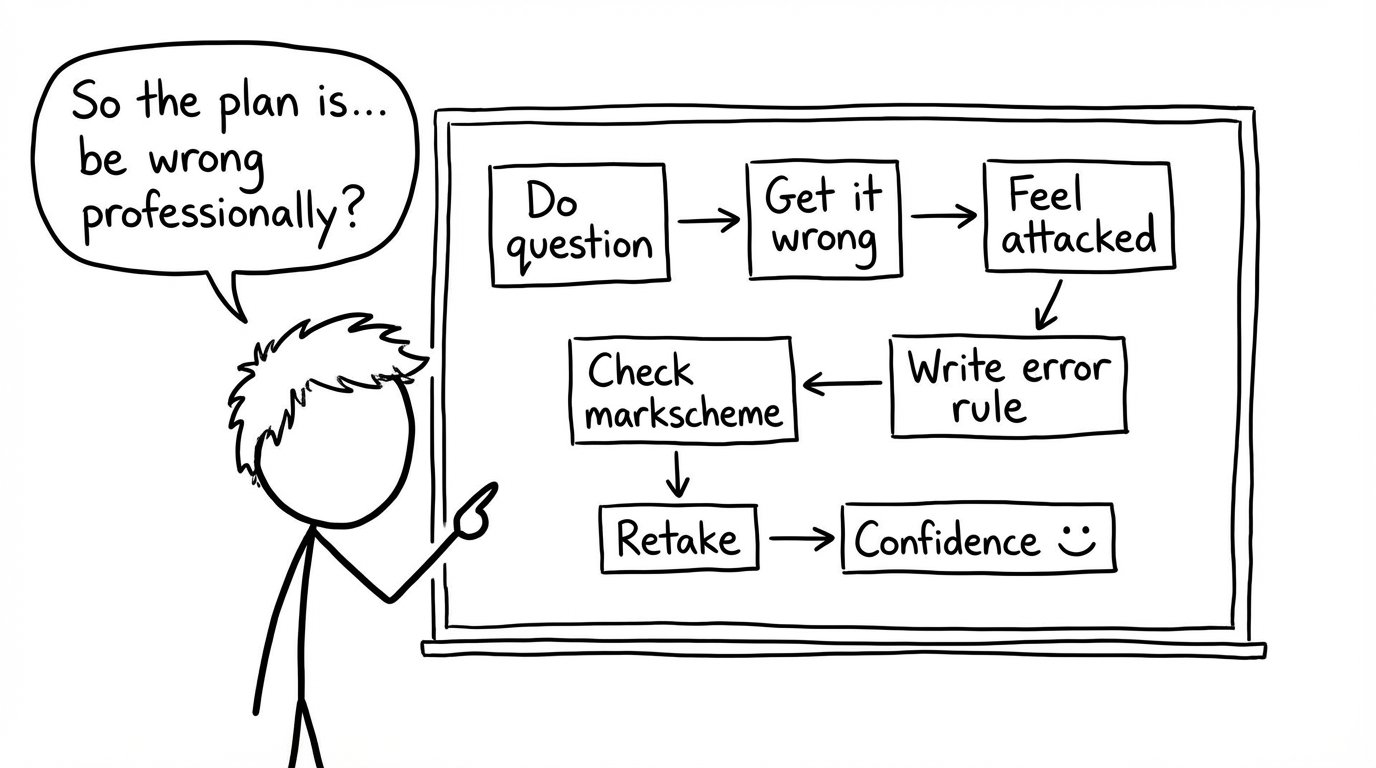
Write down your top 5 recurring mistakes. If the same mistake appears again next session, your 4 hours are not being converted into feedback.
Speed of correction
How long does it take you to go from "wrong" to "consistently right"? If it takes weeks for small skills (like units, structure, command terms), your sessions are too passive.
RevisionDojo helps here because your Questionbank practice plus feedback creates a tighter loop: attempt, get feedback, retake, track.
When 4 hours is NOT enough for IB (and what to do)
4 hours becomes "not enough" in IB when one of these is true:
- You're starting serious revision very late and still need to relearn large parts of the syllabus.
- You have multiple HL subjects that are content-heavy and technique-heavy (and you are weak in both).
- Your 4 hours is fragmented (constant breaks, multitasking, switching subjects every 10 minutes).
If that's you, don't jump to 10-hour days. Expand strategically:
- Add a 60–90 minute morning micro-session (Flashcards + 5 questions).
- Add one longer Mock Exams block on the weekend.
- Use Predicted Papers to concentrate effort on realistic exam patterns and reduce surprise.
For endgame strategy, keep IB: The Last 2 Weeks Before Exams (What Matters) and IB: How to Study in the Last 24 Hours (No Panic) as your anchors.
The underrated truth: 4 hours can beat 8 hours in IB
This sounds like motivation-poster nonsense, but it's not.
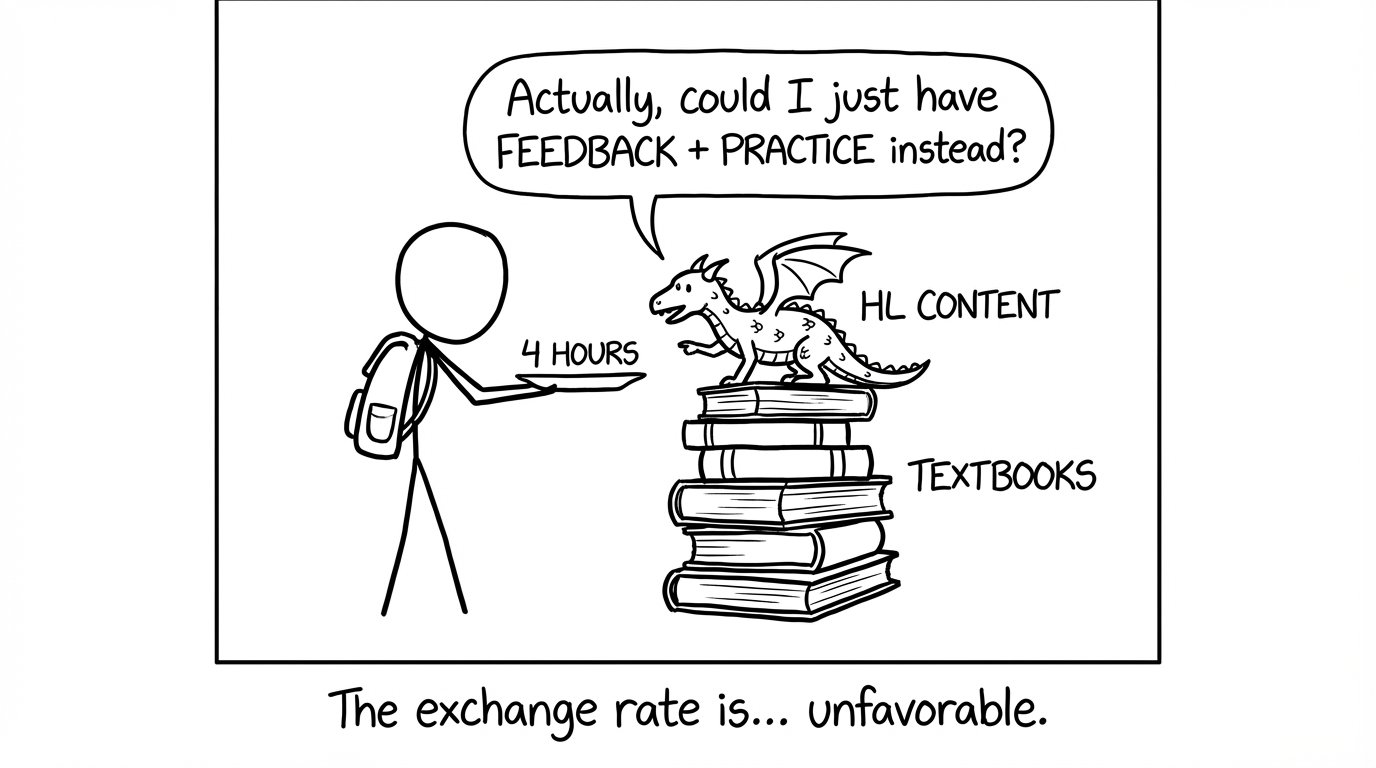
In the IB, doubling time often increases low-quality behaviors: rereading, rewriting, procrastination disguised as planning. Meanwhile, a sharp 4-hour plan forces you into the things that feel slightly uncomfortable: questions, timing, marking, and fixing.
If you want subject-specific strategy (especially for a demanding course), use a guide like How to Create a Study Plan for IB Math AA HL or How to Revise IB Math AA and AI Effectively.
FAQ
Is 4 hours a day enough to get a high score in IB?
It can be, but only if your 4 hours includes the work the IB actually marks. A high score is mostly built from repeated exam behaviors: doing questions, marking carefully, and reattempting until your answers match the expected structure. Many students study for longer than 4 hours but spend too much of that time in passive modes like rereading notes, rewriting summaries, or watching videos without testing themselves. If your 4 hours is built around a practice-first loop, it may outperform someone doing 7 hours of unfocused revision. The more important variable is consistency across weeks, because the IB rewards skills that compound: speed, accuracy, and command-term control. RevisionDojo helps make those 4 hours "high score" hours by combining Study Notes, Questionbank, Flashcards, and instant feedback through AI Chat and Grading tools, so the time turns into measurable improvement.
How should I split 4 hours of IB study across six subjects?
Split by priority, not fairness, because the IB grade doesn't care whether your schedule felt equal. Start by identifying the next exam or the weakest subject, then give it the first and best hour when your brain is fresh. A practical split is two focused blocks for one high-priority subject and two blocks shared between two lower-priority subjects, rotating those across the week. You also want at least one daily "maintenance" routine like Flashcards, because it keeps vocabulary, definitions, and methods alive across all IB courses. If you spread 4 hours across too many subjects in one day, you risk never getting deep enough to correct mistakes. RevisionDojo makes multi-subject rotation easier because the same workflow applies everywhere: Study Notes to clarify, Questionbank to apply, Mock Exams to simulate, and Predicted Papers to sharpen realism, with Tutors available when you need a human plan.
What if I can only manage 4 hours on weekends, not weekdays?
Then your goal is to protect daily momentum with smaller sessions, because the IB punishes long gaps more than it punishes small days. Even 20–40 minutes on weekdays can keep recall active: a Flashcards set plus 5–10 questions is enough to stop the forgetting curve from winning. On the weekend, use the 4-hour block for timed work and deep marking, since weekends are ideal for building stamina and technique. The key is to avoid turning the weekend into a marathon of passive review; instead, do at least one timed section and one error-fix session. If you only study on weekends, you can still progress in IB, but it will be slower and more stressful because each session starts with relearning. RevisionDojo supports this situation well because the Flashcards tool keeps weekday sessions light, while the Questionbank, Mock Exams, and feedback tools help you make weekend practice count.
Closing: the IB doesn't want your hours, it wants your reps
So, is 4 hours of study enough for IB?
It's enough when it produces repetitions of the real task: answering IB questions under time, seeing exactly why marks were lost, and fixing that specific thing until it stops happening.
If you want a clean way to run that process in one place, RevisionDojo is built for the full loop: Questionbank for exam practice, examiner-aligned Study Notes for clarity, Flashcards for spaced repetition, AI Chat for fast unblocking, Mock Exams and Predicted Papers for realism, plus Grading tools, a Coursework Library, and Tutors when you need feedback that feels human.
Your next step is simple: take your next 4 hours and make them measurable. Open a timed set, mark it, write your error rules, and retake. That's what "enough" looks like in the IB.