
If you have one month before your IB exams, you are not looking for motivation.
You are looking for a verdict.
You want to know whether time is still on your side, or whether the best you can do now is damage control.
Here is the honest answer: 1 month is enough to improve meaningfully in IB. But it is not enough to do everything you wish you had done. That tension is the whole game.
A month works when you stop treating IB revision like "covering content" and start treating it like training for a performance. Training is narrower. It is more repetitive. It is less romantic. And it is the only thing that reliably changes your score.
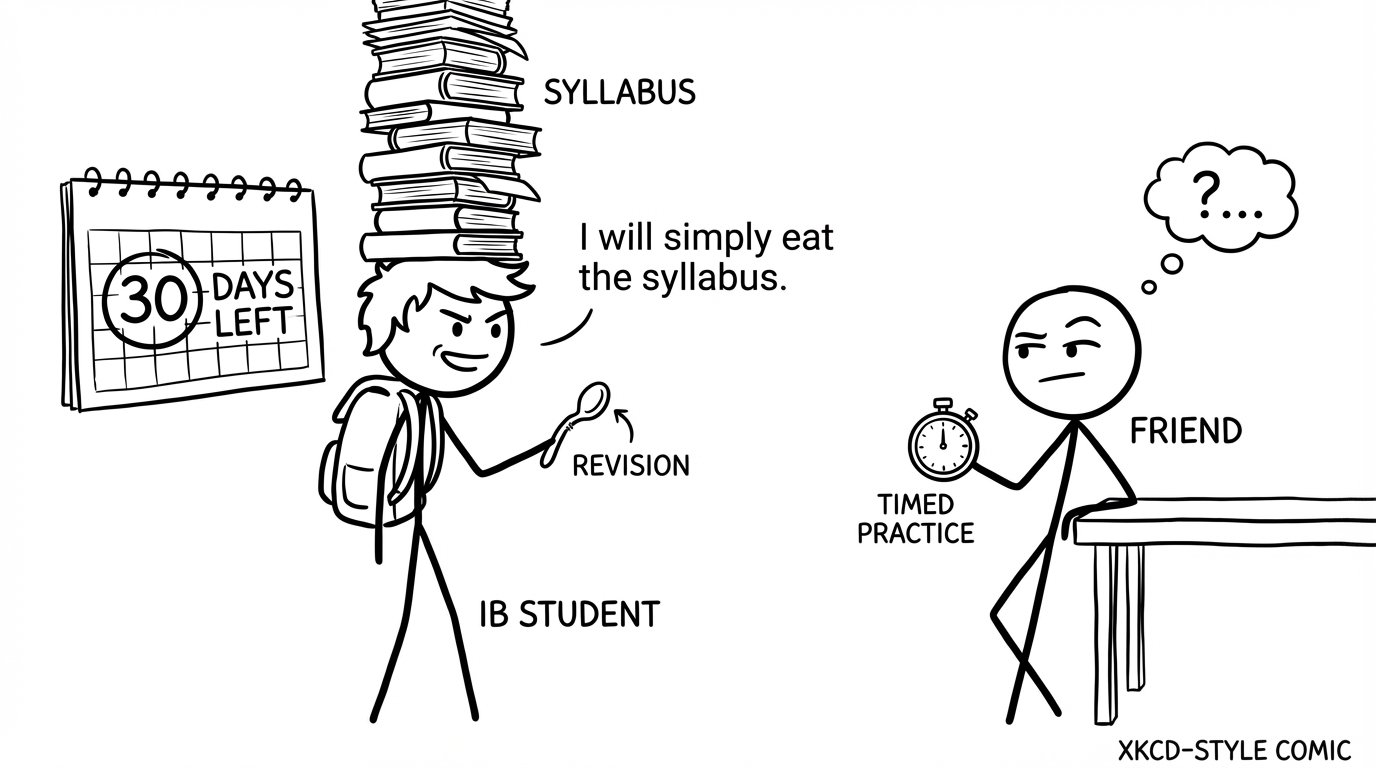
The quick answer: when 1 month is enough for IB (and when it isn't)
A month is enough for IB exams if most of the following are true:
- You have basic coverage of the syllabus already (even if it feels shaky).
- Your biggest problem is exam technique: timing, command terms, structure, and accuracy under pressure.
- You can study 2--4 hours/day on average (less on school days, more on weekends).
- You are willing to do lots of questions, not just notes.
- You can accept "high-impact topics first" instead of "everything equally."
A month is not enough (or becomes very risky) if:
- You are learning large parts of content from scratch across multiple subjects.
- Coursework crises (IA/EE/TOK) are still consuming your evenings.
- You avoid timed work because it feels uncomfortable.
The comforting part is this: even if you're in the second category, the month can still help. It just becomes a question of how much you can stabilize, not whether you can become perfectly prepared.
A 30-day IB checklist (simple, repeatable, realistic)
If you want one page to return to, use this IB checklist:
- Pick your next target by paper, not by "subject."
- Patch understanding with Study Notes (fast, limited).
- Lock memory with Flashcards (daily, short).
- Build marks with a Questionbank (topic-filtered, exam-style).
- Build calm with Mock Exams and Predicted Papers (weekly, timed).
- Use feedback: AI Chat, Grading tools, and an error log.
- Repeat the loop until the exam.
This is exactly the loop RevisionDojo is designed to support across IB subjects: Questionbank, Study Notes, Flashcards, AI Chat, Grading tools, Predicted Papers, Mock Exams, Coursework Library, and Tutors.
A good starting hub (especially if you want everything in one place) is the RevisionDojo for IB page.
The mindset shift that makes 1 month work in IB
Most IB stress comes from a hidden belief: "If I don't do everything, I'm doomed."
But high scorers do something quieter. They narrow the target.
They understand a strange truth: the IB does not reward "knowing a lot" in the abstract. It rewards producing the right kind of answer under constraints: time, command terms, mark allocation, and paper format.
That means your best use of 30 days is not building the biggest pile of notes.
It is building the smallest set of habits that reliably create marks.
If you want a structured framework for this, keep the broader workflow in view using How to Study for IB Exams: Step-by-Step Guide.
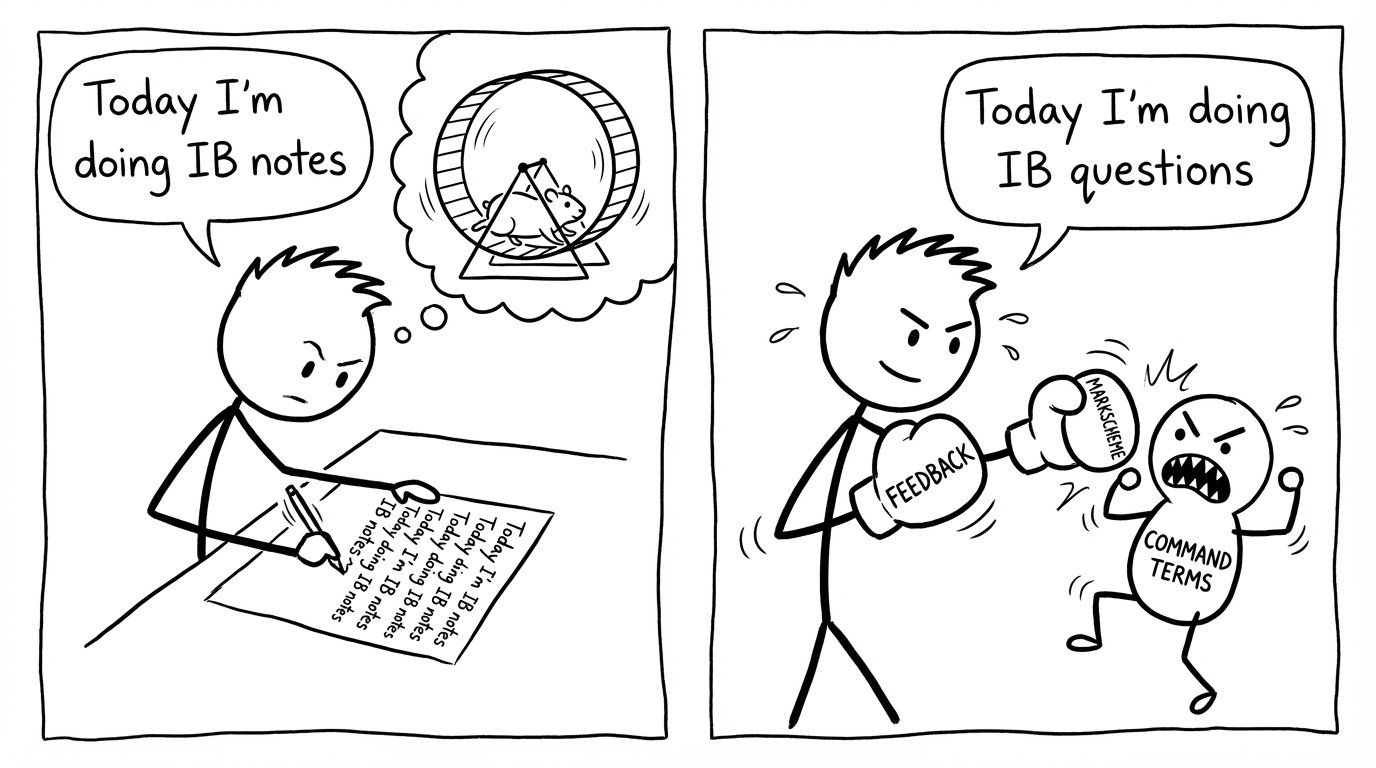
The 30-day IB plan that actually fits real life
This plan is built for IB students who need maximum ROI, not a fantasy schedule.
Days 30--21: stop the bleeding (clarity + targeted practice)
Your job in week 1 is not perfection. It is stopping avoidable losses.
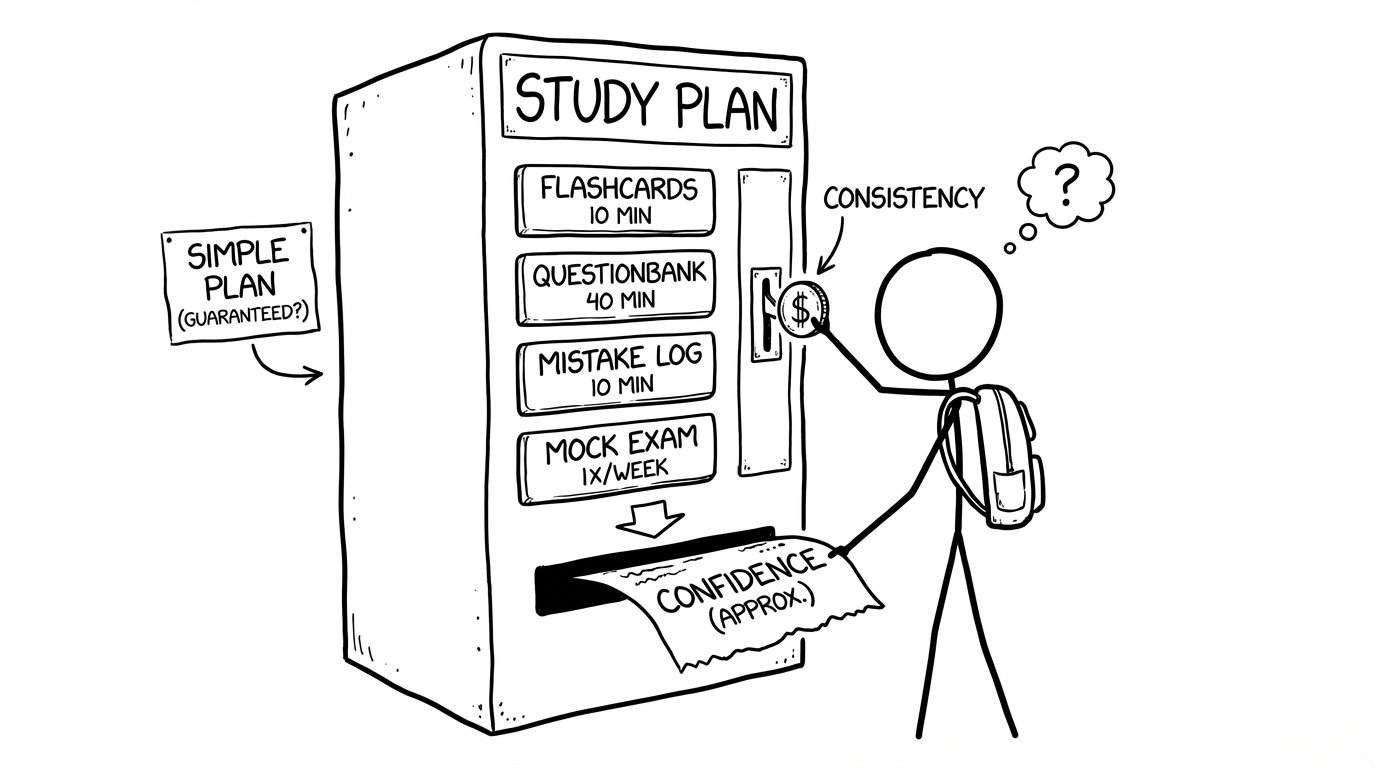
Daily structure (60--120 minutes per subject block):
- 10--15 min: Flashcards for that subject (definitions, formulas, key frameworks).
- 35--60 min: Questionbank practice on one topic (timed if possible).
- 10--15 min: review mistakes and write 3 "error rules" (what you will do next time).
Use RevisionDojo's tools to keep this tight:
- Study Notes when you're genuinely confused.
- Flashcards to keep daily recall alive.
- Questionbank to train exam behavior.
If you need a clear explanation of why question volume matters in IB, read Comprehensive IB Question Bank: Thousands of Practice Questions.
Days 20--11: convert knowledge into marks (timing + command terms)
Now you start acting like the exam is close, because it is.
Goal: fewer surprises, faster starts, cleaner structures.
Weekly targets:
- 3--5 Questionbank sessions per subject (topic-filtered).
- 1 timed session/week using Mock Exams or Predicted Papers.
In the middle of the month, the most common IB trap is "I'll do timed papers later when I'm ready."
Later arrives. Ready rarely does.
To keep your practice aligned to how the IB actually feels, lean on the RevisionDojo ecosystem described in RevisionDojo App: The Smarter Way to Prep for IB Exams.
Days 10--1: prove readiness (stamina + mistake loops)
This is not the phase for brand-new topics.
This is the phase for:
- repeating your weakest question types
- practicing under time
- fixing recurring errors
A strong final stretch for IB looks like:
- 10 min flashcards
- 60--120 min timed section/full paper
- 20 min review + retake a small set
If you want a practical blueprint for the final stretch, use IB: The Last 2 Weeks Before Exams (What Actually Matters).
How to choose what to study (triage for IB, not guilt)
In one month, you can't treat every topic equally.
So you need a triage rule that feels fair.
Use this filter:
High-impact topics (do these first)
- Topics that appear often in your paper format.
- Topics that unlock many questions (core concepts, common methods).
- Topics you are "almost good at" but keep losing marks on.
Low-impact topics (do these later)
- Rare content that would take days to learn.
- Topics you already consistently score well on.
- Topics you "like" revising but don't improve your marks.
RevisionDojo makes triage easier because your practice is organized and trackable, and because you can concentrate on the practice loop (notes -> questions -> feedback). If you want a broader view of efficient habits in IB, read 5 Proven IB Revision Hacks Backed by Science.
The biggest accelerant in 1 month: feedback that arrives today
A month becomes enough when your cycle is short.
In IB, slow feedback is expensive. You repeat the same mistake for two weeks because no one corrected it early.
This is where RevisionDojo's connected tools matter:
- Jojo AI Chat helps you get unstuck fast without losing momentum.
- Grading tools give criterion-aligned feedback loops when you need specificity.
- The Coursework Library reduces uncertainty by showing what strong work looks like.
- Tutors help when you need a human strategy reset, not just more effort.
If you want a calmer philosophy for effort and consistency, see Why Some IB Students Stay Consistent.
What not to do in the last month (common IB time traps)
These are the traps that steal time while feeling productive:
- Rewriting notes from scratch because it reduces anxiety.
- Making "perfect" schedules you don't follow.
- Watching long videos for comfort instead of doing questions.
- Doing only easy topics to protect your confidence.
- Avoiding timed practice until the final week.
A month is enough for IB only if you are honest about what raises marks.
FAQ: Is 1 month enough to study for IB exams?
Can I still get a 6 or 7 in IB with only 1 month left?
It depends on your starting point, but yes, it can be possible in IB if you already have foundational coverage and you shift to exam training immediately. Many score jumps in IB come from fixing repeatable problems: poor timing, weak structure, and misunderstanding command terms. Those are skills that improve quickly when you practice under constraints and get feedback. The month becomes powerful when you stop trying to "learn everything" and instead get very good at the most common question styles. You also need consistency, because IB improvement compounds across many short sessions, not one heroic weekend. A platform like RevisionDojo helps by making the loop tight: Study Notes for quick clarity, Questionbank for volume, Flashcards for retention, and Mock Exams for realism.
How many hours a day should I study for IB if I only have 30 days?
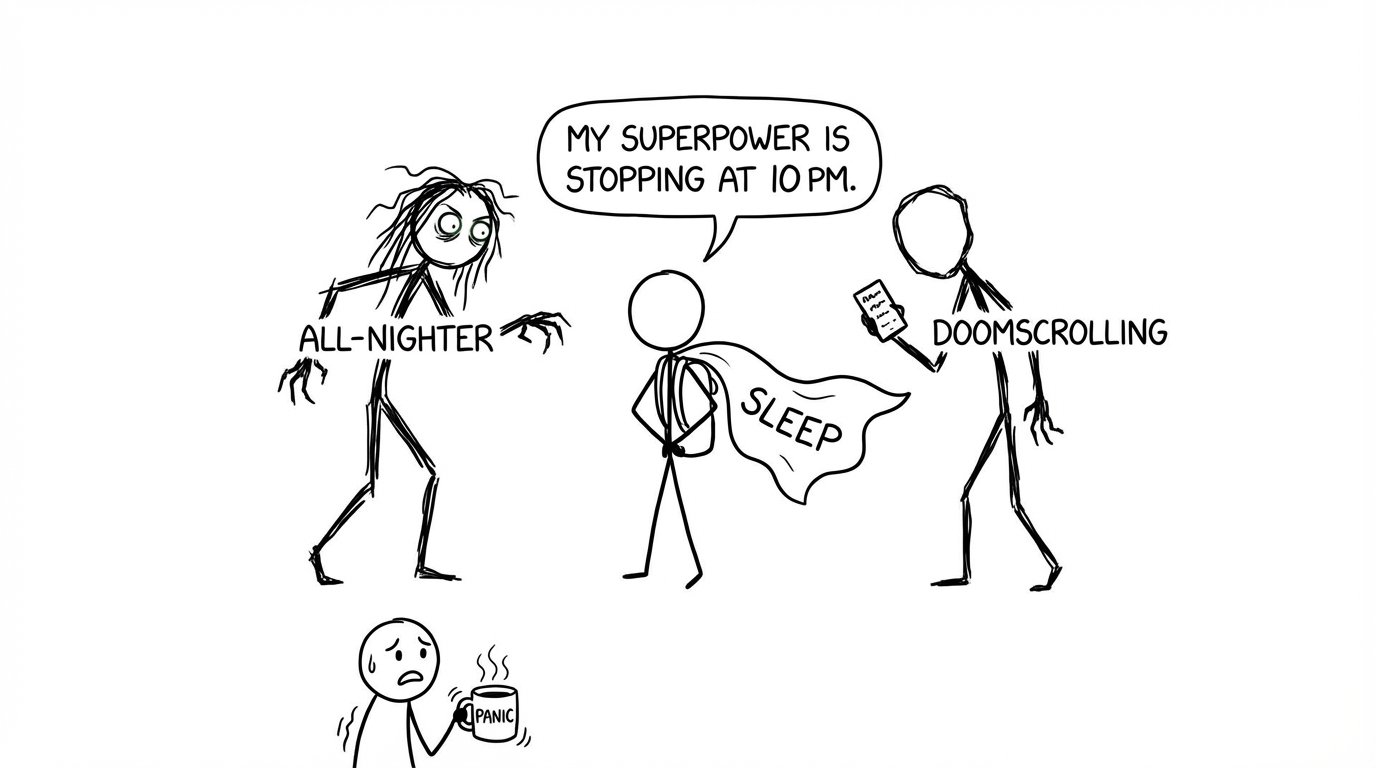
There is no single correct number, but most IB students who improve meaningfully in a month average something like 2--4 focused hours per day, with variation by school workload and weekends. The more important point is not hours, but shape: daily recall, frequent exam-style questions, and weekly timed sessions. If you do three hours of passive review, it often produces less than one hour of targeted questions plus feedback. In IB, your score is constrained by what you can produce on paper under time pressure, so practice has to resemble that performance. You should also protect sleep, because memory and speed collapse when you run on exhaustion. The safest plan is a repeatable routine you can sustain for 30 days, supported by tools like Flashcards and a Questionbank.
Should I focus on notes or practice questions in the final month of IB?
In the final month of IB, practice questions should dominate, with notes used as a targeted patch tool. Notes are useful when they remove confusion quickly, but they become a trap when they turn into endless rewriting. Questions force retrieval, reveal misunderstandings, and train structure and timing all at once. That is why a Questionbank is so effective late in the season: it turns effort into evidence. After each session, you should review mistakes and convert them into small, repeatable rules or flashcards, so the same errors don't return next week. If you are stuck on a concept, use Study Notes briefly, ask AI Chat to clarify, then immediately prove it with another question. That tight loop is what makes a month feel like enough in IB.
What if I'm behind because of IA/EE/TOK and I only have a month for IB exams?
This is common in IB, and it requires a boundary more than a miracle. You need to separate "coursework maintenance" from "exam training," so one doesn't consume the other. Set specific time boxes for coursework and stop when the timer ends, because perfectionism expands to fill every evening. Use feedback tools (like Grading tools) to shorten revision cycles so you are not guessing what to fix. Then build a small daily exam loop that you can protect: Flashcards, one topic question set, and a short mistake review. Even 60--90 minutes done consistently can stabilize your exam performance over a month. If you need examples and models to reduce coursework uncertainty, the Coursework Library helps you see what strong work looks like without spiraling into endless edits.
Closing: make 1 month enough for IB by changing the game
One month is not enough to become a different person.
But it is enough to become a more exam-ready version of yourself.
The IB rewards what you can do under constraints, not what you intended to do.
So build a system that produces outputs:
- Study Notes for fast clarity
- Flashcards for daily recall
- Questionbank practice for marks
- AI Chat when you get stuck
- Mock Exams and Predicted Papers for timed realism
- Grading tools, a Coursework Library, and Tutors when you need feedback that actually changes your next attempt
Start with the International Baccalaureate (IB) hub and set up your next 7 days. Then repeat.
That is how you make a month enough for IB: not by doing everything, but by doing the right loop, every day.