
IB Hardest Subjects Ranked (2026): What to Expect
Most IB students don't quit because a subject is "too hard." They quit because the hard part is invisible at first.
In September, you meet a syllabus. It looks finite. It looks like a list.
By February, the syllabus has become a feeling: you sit down to revise and your brain starts negotiating. "Maybe I'll do this later." "Maybe I'll just reread notes." "Maybe I'll focus on the easy HL first."
That's why ranking the hardest IB subjects (for 2026 exams) isn't about bragging rights. It's about clarity. If you know why a subject is hard, you can build the right routine early: targeted practice, feedback loops, and exam stamina instead of hope.
If you want a single control panel for that, RevisionDojo App: The Smarter Way to Prep for IB Exams is built around the exact cycle the IB rewards: understand, recall, apply, correct, repeat.
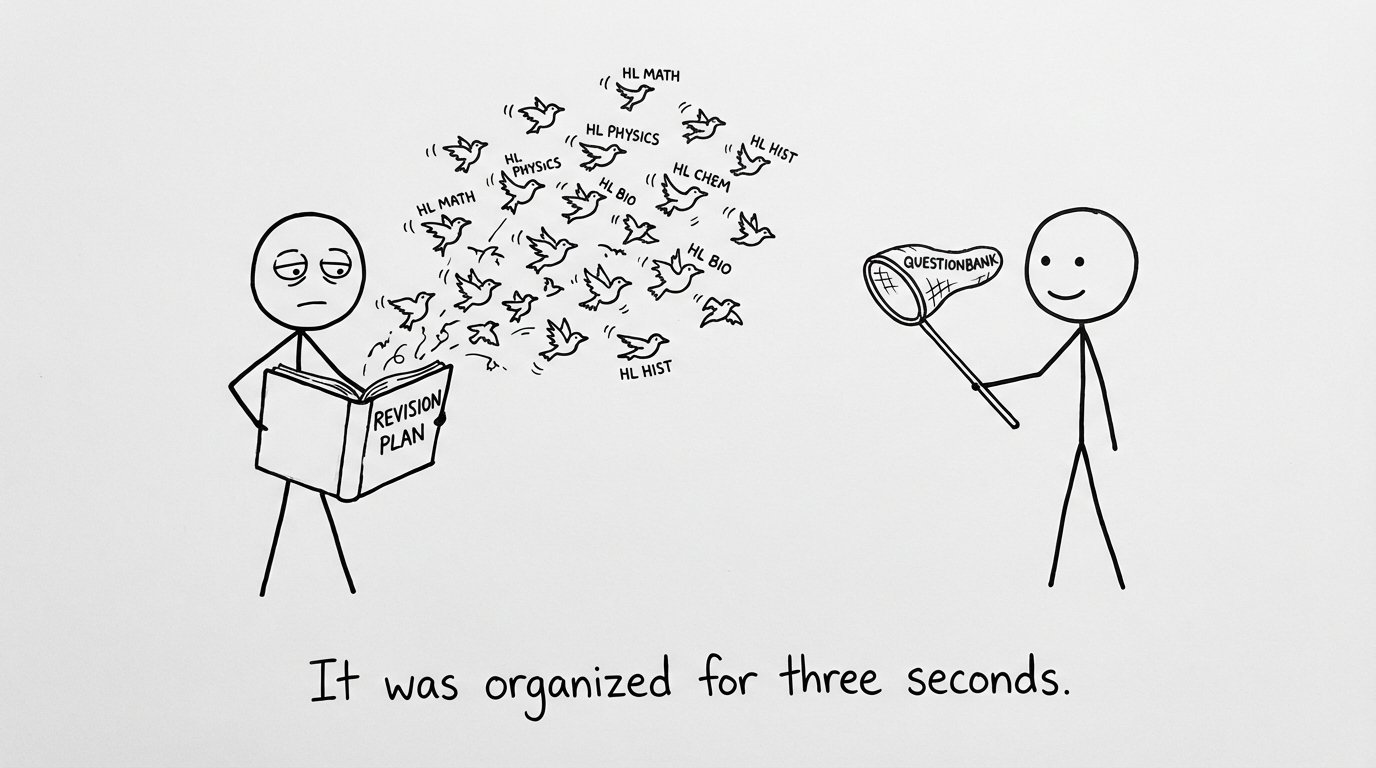
Quick checklist: what makes an IB subject "hard" in 2026?
Use this before you trust any ranking (including this one). A hard IB subject usually has at least three of these:
- High cognitive load: concepts stack, and small gaps explode later.
- Time pressure: exams reward speed and precision.
- Technique dependency: knowing content isn't enough; you need the right method.
- Workload drag: labs, essays, and coursework create a second curriculum.
- Markscheme strictness: you can be "basically right" and still lose marks.
A practical way to diagnose your personal difficulty: do a short timed set in the Questionbank, then use AI Chat (Jojo) to unpack why your marks dropped. Difficulty becomes solvable when it becomes specific.
Hardest IB subjects ranked (2026)
This ranking reflects what most students report as hardest to score a 6 or 7 in, especially at Higher Level (HL). Your experience can differ based on strengths, teacher support, and subject combinations.
IB Mathematics: Analysis and Approaches (AA) HL
This is the classic top spot in any IB difficulty conversation, and it earns it.
Math AA HL is hard because it demands transfer. You're rarely rewarded for repeating a template. The exam keeps asking: can you recognize structure, choose a method, and communicate clean reasoning under time pressure?
Common 2026 pain points:
- Multi-step problems where one wrong assumption ruins everything.
- Proof and justification expectations that punish vague thinking.
- Topics that interlock (functions into calculus into series into vectors).
What helps most:
- Build topic maps early using the IB Math AA resource hub.
- Practice navigation and time-saving habits with How to Master the IB Math AA HL Formula Booklet.
- Run weekly timed sets, then patch weaknesses using the Questionbank filters by topic.
If you want a more realistic comparison mindset (not fear-based), read How Difficult Is IB Math HL Compared to Other IB Subjects?.
IB Physics HL
Physics HL is where many IB students discover an uncomfortable truth: you can "understand" a concept and still not be able to use it.
Physics HL is hard because it mixes conceptual depth with mathematical execution. The exam likes unfamiliar contexts. It's not enough to remember equations. You need to model situations correctly.
Typical struggles:
- Setting up problems (the hardest part is often the first 20%).
- Connecting topics across the paper (fields, energy, waves, uncertainty).
- Maintaining accuracy while the clock is loud.
What helps most:
- Treat mechanics as your foundation and rebuild it with targeted practice: Mechanics (IB Physics).
- Make "explain your setup" a habit: after each question, write one line on why you chose that approach, then check against feedback.
- Use Jojo AI Chat to diagnose misconceptions fast, then immediately retest with another Questionbank item.
For HL vs SL expectations, keep this nearby: How Does IB Physics HL Differ from SL in Difficulty?.
IB Chemistry HL
Chemistry HL is hard in a different way: it punishes half-learning.
In IB Chemistry HL, memorization without understanding breaks quickly. But understanding without repetition also breaks, because the course is dense and the markschemes are picky.
Where students get stuck:
- Multiple representations (equations, graphs, particle models) in one question.
- Organic mechanisms that feel like a language you can't quite speak.
- Data booklet dependence: students have the information, but can't deploy it.
What helps most:
- Build strong "reference reflexes" with the Chemistry Data Booklet.
- Drill high-yield HL content in small loops (10 questions, review errors, 10 more).
- For organic, keep it simple and consistent: Organic Chemistry HL notes.
Chemistry HL becomes manageable when you stop treating it as a chapter-based subject and start treating it as a skills-based one.
IB History HL
History HL is often underestimated early because the content feels "readable." Then the first timed essay arrives.
History HL is hard because your bottleneck is not knowledge. It's synthesis under time. The IB isn't asking for facts. It's asking for a defensible argument, structured clearly, grounded in evidence, and shaped to the exact prompt.
What makes it uniquely difficult:
- Volume: you can't cram a two-year reading load in April.
- Writing stamina: your hand and mind need training.
- Markscheme nuance: "good writing" is not always "good IB writing."
What helps most:
- Use a grader loop early: draft short paragraphs and run them through RevisionDojo's Grading tools for criterion-based feedback.
- Build a "thesis bank" of flexible arguments rather than isolated notes.
- Use Flashcards for dates and key historiography terms so recall stops stealing writing time.
IB English Literature HL / Language & Literature HL
English HL is hard because it's judged.
That sounds obvious, but it matters: in IB English, many students feel they "said something smart" and still lose marks. The assessment rewards controlled analysis: precise choices, textual evidence, and clear line of argument.
Why it gets difficult:
- You must read deeply and write quickly.
- Your interpretation needs to be both personal and justifiable.
- Feedback quality varies across schools, so improvement can feel slow.
What helps most:
- Use RevisionDojo's Coursework Library to see what high-scoring analysis looks like, then imitate the structure, not the voice.
- Train with timed mini-responses and get fast feedback using AI Chat and the Grading tools.
- Turn common literary devices into a recall deck with Flashcards so your analysis vocabulary becomes automatic.
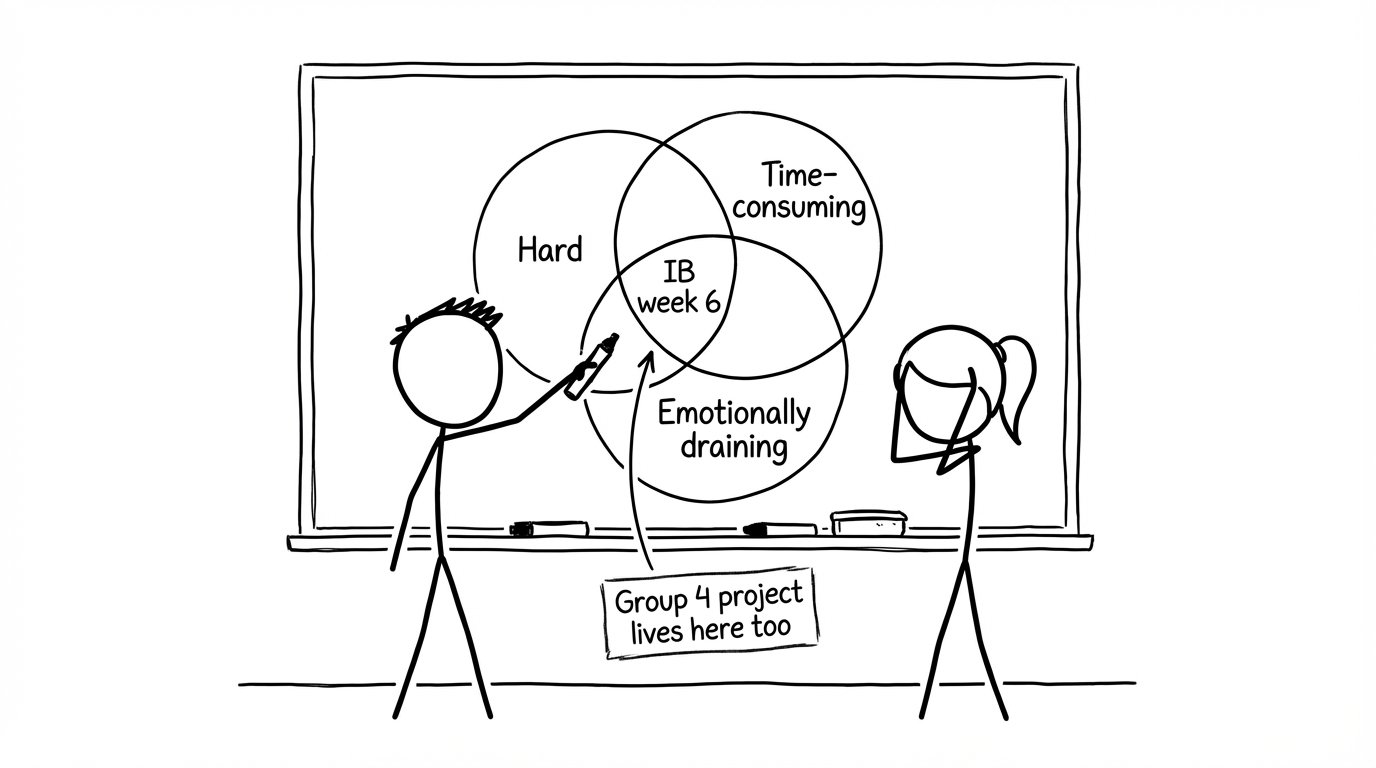
IB Biology HL
Biology HL is "friendly hard." It welcomes you in with familiar topics. Then it asks you to be precise.
The IB Biology HL challenge is volume plus application: definitions, processes, experimental design, and data interpretation. The content is large, and the exam expects you to move between micro and macro explanations smoothly.
What helps most:
- Learn the HL vs SL gap clearly: IB Biology HL vs SL Difficulty: 7 Key Differences.
- Use Study Notes for clean pathways and processes, then immediately lock them with Flashcards.
- Drill data-based questions in the Questionbank so interpretation becomes normal, not scary.
IB Economics HL
Economics HL is hard because it's deceptively logical.
At first, it feels like common sense with graphs. Later, it becomes a precision sport: diagrams must be correct, evaluation must be balanced, and real-world examples must actually fit the theory.
Common traps:
- Writing long answers that don't earn proportional marks.
- Weak evaluation (assertions without criteria).
- Diagram errors that cascade into lost marks.
What helps most:
- Use the Questionbank to practice exam-style prompts and force yourself to write within the mark allocation.
- Use AI Chat to challenge your evaluation: "What would a top examiner say is missing?"
- Get your essays marked early using the Grading tools so you don't practice the wrong habits.
A smarter way to use the ranking: match difficulty to your routine
Rankings are useful, but only if they change behavior.
Here's the reflective truth of the IB: the hardest subjects aren't the ones with the most content. They're the ones where your studying feels productive but doesn't translate into marks.
So build a routine that forces translation:
- Study Notes for clarity (short, syllabus-aligned, no rewriting marathons).
- Flashcards for daily recall (small sessions that compound).
- Questionbank for application (the only place "understanding" becomes performance).
- AI Chat to get unstuck fast, without losing momentum.
- Weekly Mock Exams and Predicted Papers to train time pressure.
- Grading tools plus the Coursework Library to keep coursework from turning into fog.
- Tutors when you need human strategy, accountability, or an honest recalibration.
If you're in the final stretch, keep this open: IB: The Last 2 Weeks Before Exams (What Matters).
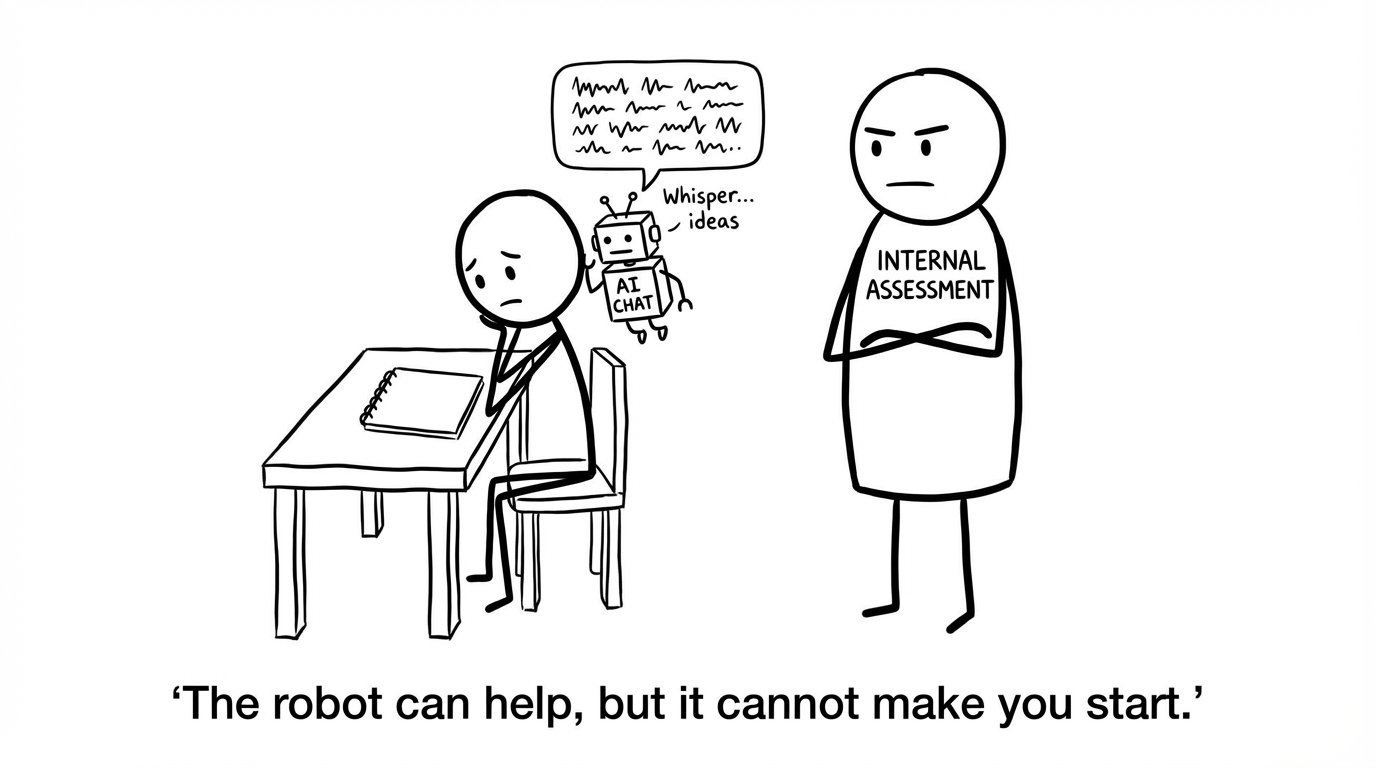
FAQ: hardest IB subjects (2026)
Is there an "objectively" hardest IB subject?
Not in a way that matters for your grade. The IB makes subjects hard in different directions: Math AA HL is abstract and cumulative, Physics HL is modeling under pressure, and History HL is synthesis through writing stamina. "Hardest" depends on what drains you first: time, precision, memory, or anxiety. A student who thrives on proofs may find Math AA HL satisfying and find English HL exhausting. The useful move is to identify your bottleneck early and then design practice around it. That's why tools like RevisionDojo's Questionbank and Mock Exams matter: they reveal what's actually costing you marks.
Which IB subjects are hardest to get a 7 in?
Usually the subjects where markschemes reward both skill and communication, not just correct answers. In IB Math AA HL and Physics HL, a 7 often requires consistent accuracy across unfamiliar contexts, which means your basics must be automatic. In essay-based subjects like History HL and English HL, a 7 requires structure, argument control, and evidence selection under strict time limits. Many students can produce a great essay at home and still struggle in exam conditions, which is why timed practice changes everything. The path to a 7 is less about "more studying" and more about "more feedback." Use Grading tools for writing subjects, and use the Questionbank plus Jojo AI Chat to tighten technique in problem-solving subjects.
How should I revise if I'm taking multiple "hard" IB HLs?
Assume you can't do everything equally, and that's fine. In the IB, balance is a strategy: you're not trying to become perfect everywhere, you're trying to be reliable everywhere. Start by running small timed blocks for each HL, then rank your weaknesses by marks lost, not by vibes. Build a weekly rhythm where each HL gets two types of sessions: one clarity session (Study Notes + Flashcards) and one performance session (Questionbank or Mock Exam). Use Predicted Papers and Mock Exams to simulate pressure, but keep them weekly, not daily, so you have time to patch gaps. If you feel stuck choosing what to fix first, RevisionDojo's connected workflow (Notes, Flashcards, Questionbank, AI Chat, grading, and analytics) helps you stop guessing.
Do universities care if I pick the hardest IB subjects?
Universities care about alignment and achievement more than suffering. The IB already signals rigor, and admissions teams often prefer a strong score in an appropriate combination over a lower score in the "hardest" set. If you need guidance on HL/SL decisions, read Do Universities Care Whether My Child Took HL or SL in IB Subjects?. The deeper point is that difficulty is only impressive if you can perform. Your best plan is the one you can sustain without burnout, because the final months decide more than the first weeks. If you want to keep performance stable, use a system that makes revision repeatable, not dramatic.
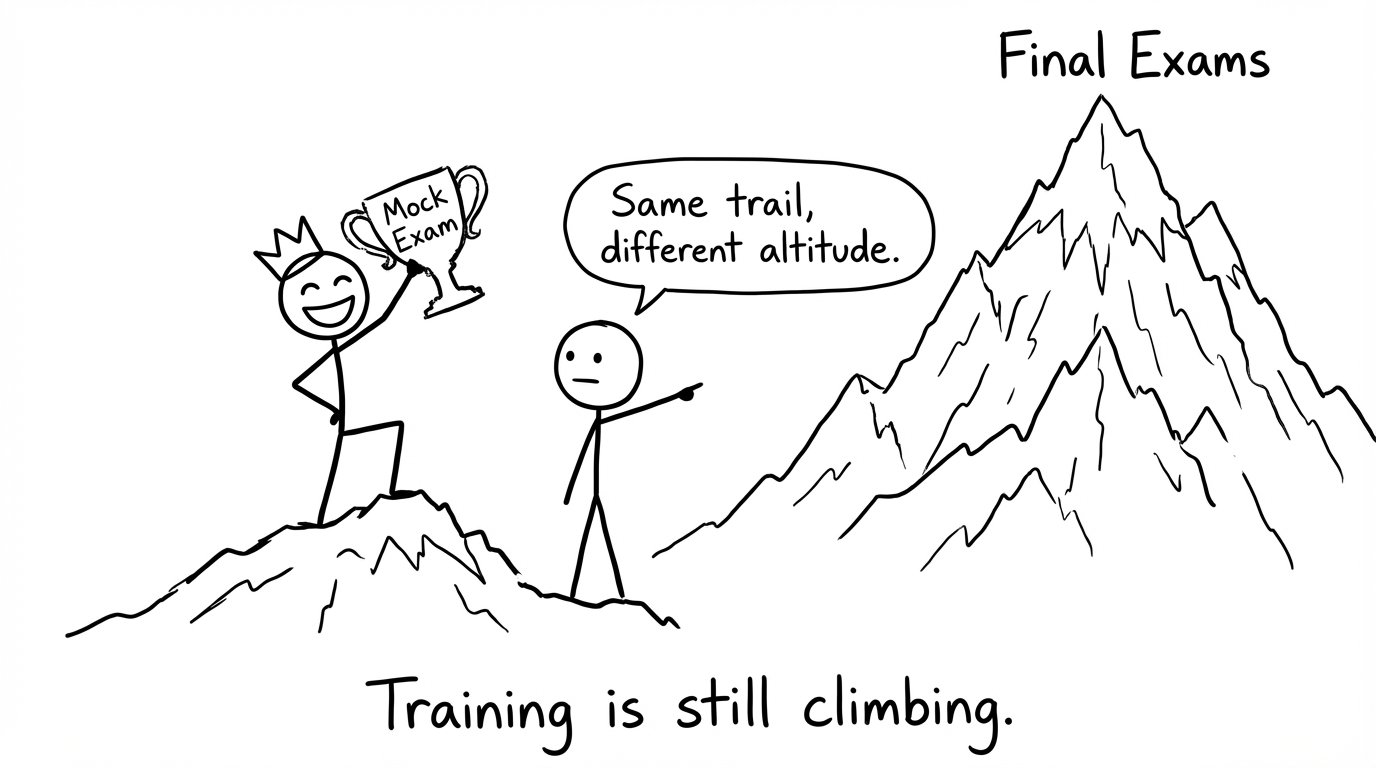
Closing: make the IB feel smaller, then repeat
The hardest IB subjects aren't a verdict. They're a forecast.
A forecast is useful because it tells you what to pack.
If you're taking one of the hardest IB subjects in 2026, pack a routine that's built for marks: daily recall with Flashcards, targeted drilling in the Questionbank, fast explanations via AI Chat, and weekly realism through Mock Exams and Predicted Papers. Keep coursework stress contained with Grading tools and the Coursework Library, and use Tutors when you need a human to sharpen strategy.
Start by setting up your system here: RevisionDojo App: The Smarter Way to Prep for IB Exams. The IB rewards consistency more than intensity, and RevisionDojo is built to make consistency easier.