
There's a moment every IB student recognizes.
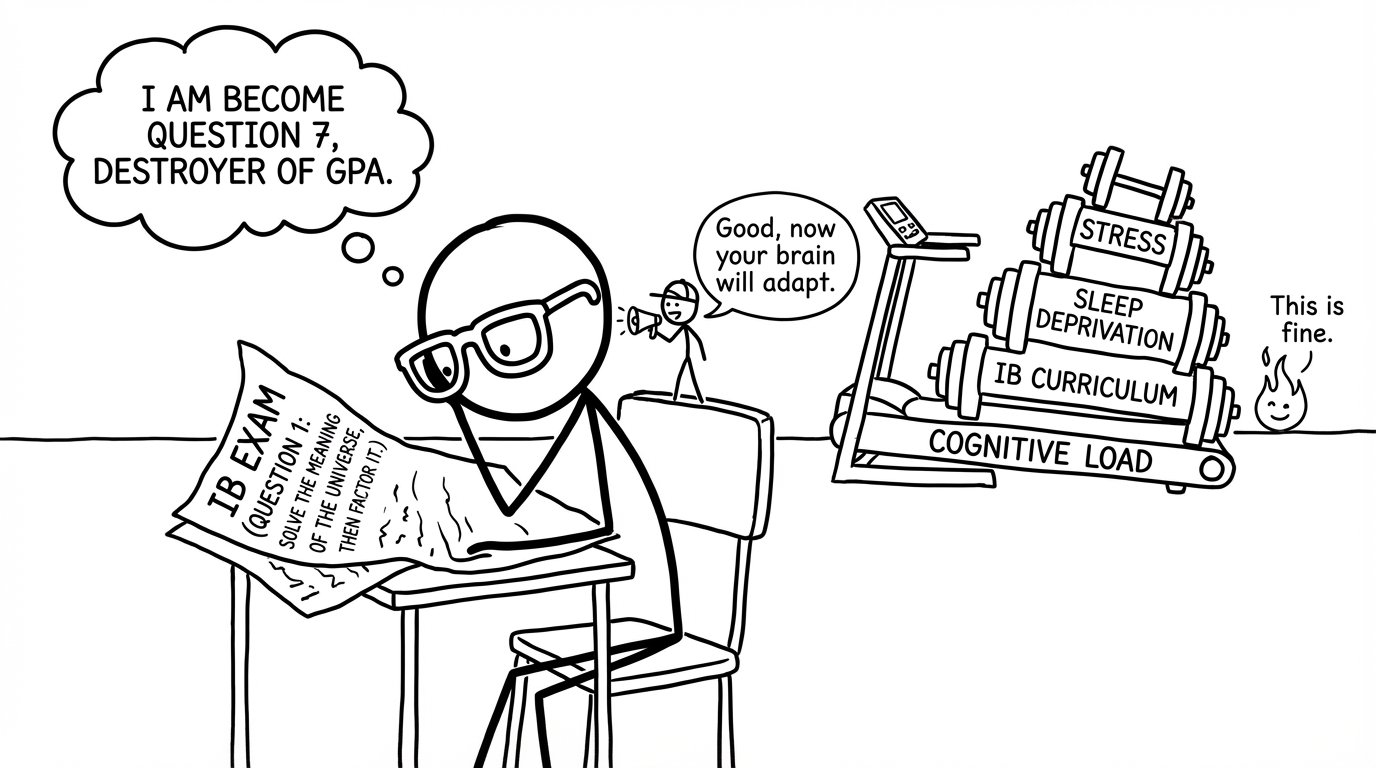
You open a paper. Your eyes skim Question 7. Your brain does something between a reboot and a resignation. And you think: This can't be the real standard. This is a prank.
But here's the secret: hard IB papers are not just obstacles. They're training devices. They teach you to think in the exam's language, not just your own. They turn panic into patterns. And if you use them correctly, they quietly make your real IB exams feel smaller.
In this article, we'll look at what difficult IB papers are really doing to your brain, why they can improve your marks faster than "more revision," and how to turn every tough attempt into a calm, repeatable system (especially with RevisionDojo's Questionbank, Study Notes, Flashcards, AI Chat, Grading tools, Predicted Papers, Mock Exams, Coursework Library, and Tutors).
The hard IB paper checklist (use this every time)
Before we go deeper, here's a short checklist you can run after any tough IB paper. It's simple on purpose.
- Identify what type of difficulty it was: content gap, command term, method, or time pressure.
- Write a 1-line mistake rule ("Underline command terms before writing").
- Fix the gap using Study Notes, not random videos.
- Do 10--20 targeted questions on that exact weakness.
- Retake a short timed section within 3--7 days.
If you want the broader structure around this loop, pair it with How to Study for IB Exams: Step-by-Step Guide and keep your practice anchored to real feedback.
Why hard IB papers feel personal (and why they aren't)
Hard IB papers don't just test knowledge. They test your relationship with uncertainty.
In normal classwork, the world is kind. Topics are separated. The question tells you what chapter you're in. The teacher's voice is in the margins.
In IB exams, the kindness disappears.
A difficult IB paper mixes topics, hides the "real point," and forces you to decide what matters under time. That's not cruelty. It's the assessment design. The IB wants to know whether you can transfer understanding, not just repeat it.
So when a paper feels like it's attacking you, it's usually doing something else: revealing where your studying has been passive. That's useful information. It's also why high scorers don't avoid hard IB papers. They collect them.
Hard IB papers build the skill nobody schedules: exam thinking
Most IB students schedule "revision."
Top scorers schedule "exam thinking."
Exam thinking is the ability to look at a question and immediately choose:
- what the examiner wants,
- what method earns marks,
- what to skip (for now),
- and what a complete answer looks like.
Hard IB papers force you into that mode because they remove the illusion that effort alone is enough. They teach you to stop writing essays at the exam and start writing answers.
This is why practicing with a structured bank matters. RevisionDojo's Questionbank feature is useful not because it's "more questions," but because it helps you repeatedly meet the IB format until your response becomes automatic.
If you want a detailed guide to how question practice should work, read Comprehensive IB Question Bank: Thousands of Practice Questions.
The confidence trap: hard IB papers separate feelings from results
Here's an uncomfortable truth about IB revision:
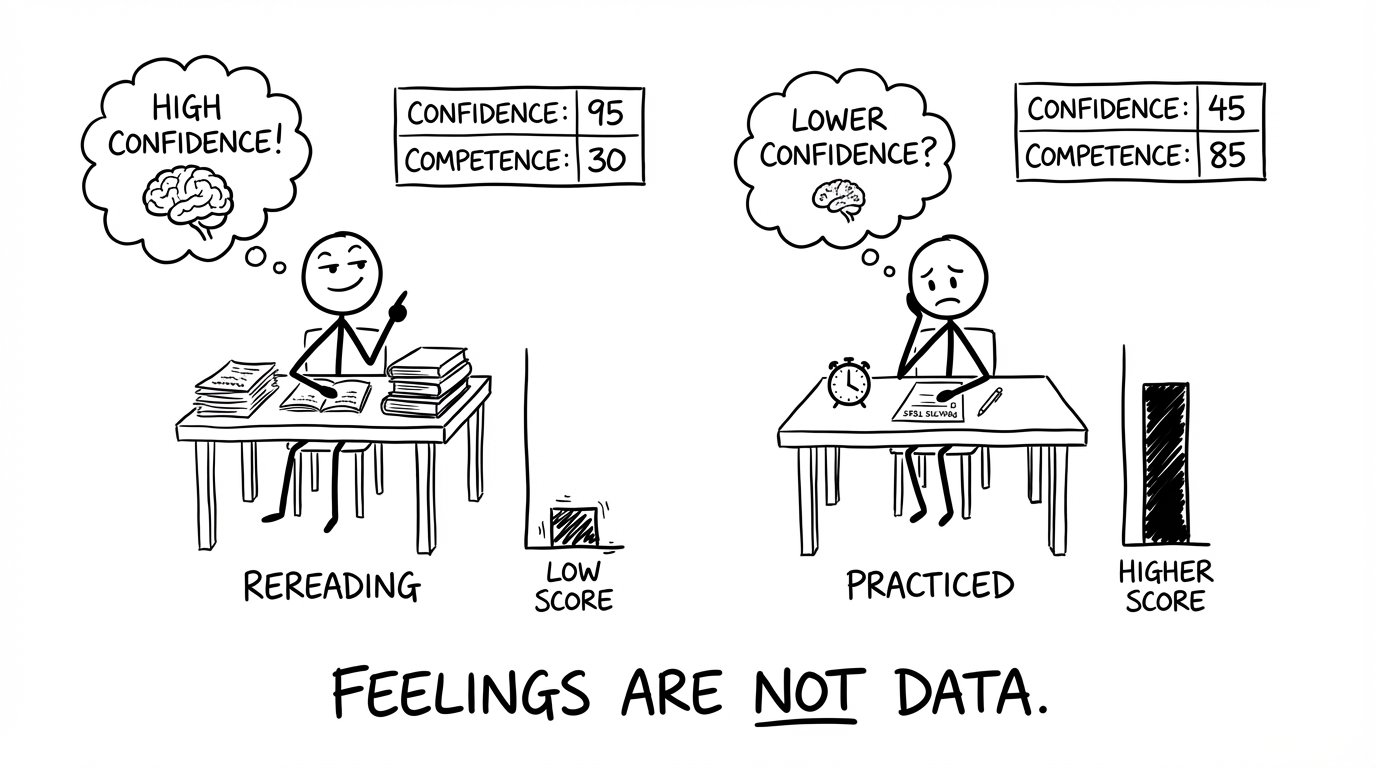
You can feel ready and still underperform.
That usually happens when your revision is built on recognition: rereading notes, highlighting, watching explanations, "understanding" in a calm environment.
Hard IB papers are the antidote. They reveal competence, not comfort.
They also do something psychologically helpful: they lower your attachment to "feeling good." You start trusting evidence instead.
- "I got 11/25 on a timed section." (data)
- "I lost marks because I ignored the command term." (data)
- "After drilling that subtopic, I got 19/25." (data)
That's why difficult practice can reduce IB anxiety: it replaces imagination with measurement.
If exam stress is your main obstacle, How to Beat IB Exam Anxiety (Without Burning Out) pairs well with the approach in this post.
The secret advantage of hard IB papers: they teach you the markscheme
Every IB student says they want to "learn the content."
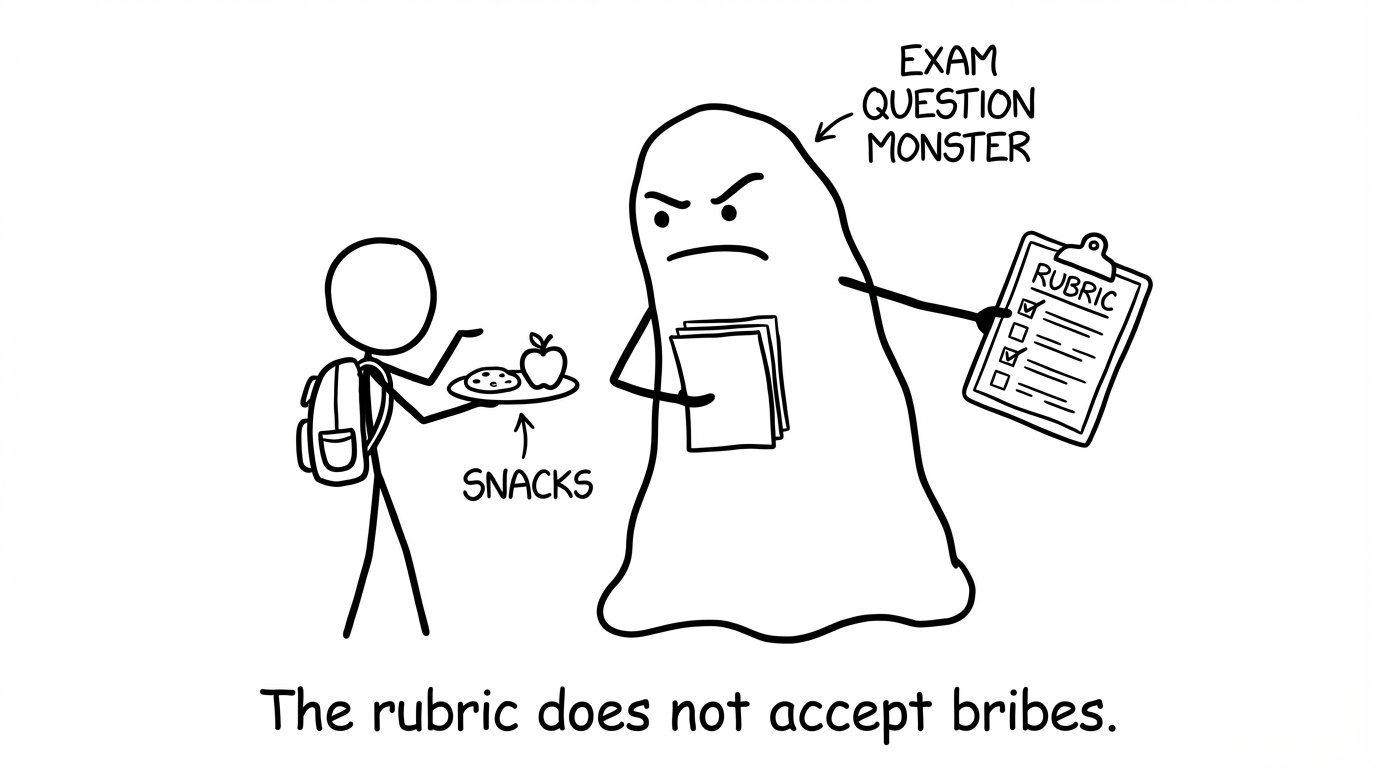
But the real game is learning what the markscheme rewards.
Hard IB papers tend to punish vague knowledge. They require:
- correct structure,
- command term accuracy,
- method marks awareness,
- and clean explanation under pressure.
That means every hard paper is a lesson in what counts.
This is where fast feedback matters. If you practice inside RevisionDojo, you can combine:
- Study Notes to clarify what you missed
- Flashcards to stop the forgetting loop
- Questionbank practice to reshape knowledge into exam answers
- AI Chat (Jojo) to get unstuck quickly
- Grading tools to tighten written responses
Start with the ecosystem overview in RevisionDojo App: The Smarter Way to Prep for IB Exams.
How to use hard IB papers without burning out
A hard IB paper can help you. Or it can just hurt your confidence.
The difference is whether you treat it like a judgement or like a diagnostic.
Do fewer full papers, more targeted loops
Full papers are great, but they're expensive. They cost time and emotional energy.
Instead, use a ladder:
- 15--25 minutes: timed set on one topic
- 30--45 minutes: timed mixed section
- 60+ minutes: full Mock Exams (occasionally)
This protects consistency, which matters more than hero sessions.
To build stamina properly, use How to Run Timed IB Mock Exams in RevisionDojo (Exam Mode + Test Builder). And when you're ready for realism, use RevisionDojo's Predicted Papers and Mock Exams features as part of the same feedback loop.
Turn the hard paper into a "mistake menu"
After you finish, don't just mark it and move on.
Write a short list:
- 3 errors that cost marks (not "I'm bad at this")
- the rule that prevents them
- the topic to drill next
This is why RevisionDojo works well for IB students: the tools connect. You can jump from a mistake to the exact practice needed, without building a new study system every week.
If you want a calmer structure during exam season, How to Stay Sane During IB Exam Season is built around the same idea.
Hard IB papers make you better at time, not just content
A lot of IB students learn this too late: timing is a separate skill.
You can know the syllabus and still run out of minutes.
Hard IB papers are brutal because they force choices. They expose:
- where you over-write,
- where you get stuck trying to be perfect,
- and where you don't recognize "enough for full marks."
The fix isn't "write faster."
The fix is "write in markscheme shapes." Short, direct, and structured.
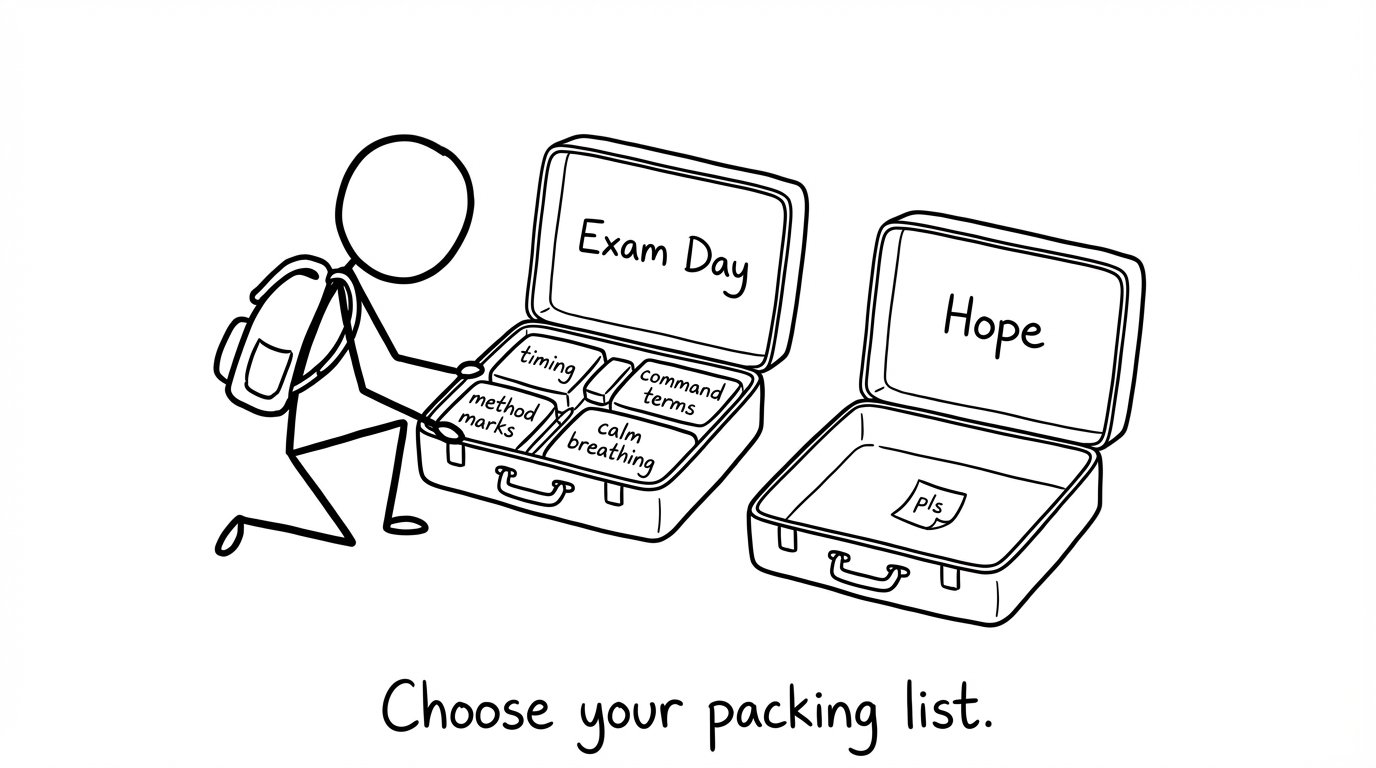
To train this, use the IB Exam Day Checklist: The Ultimate Guide as a routine, then rehearse it weekly with timed practice.
Hard IB papers secretly help your coursework too
This part surprises students.
A hard IB paper doesn't only help the final exam. It also improves the skills that leak into coursework:
- explaining methods clearly
- using evidence precisely
- structuring arguments with judgement
- writing to criteria (not vibes)
And because coursework stress often crowds out exam revision, fast feedback matters. RevisionDojo's Grading tools and Coursework Library help you shorten the "Is this good?" loop, so your IB season feels less like six subjects plus a black box.
If you're building your whole setup, start at All your IB revision needs, in one place.
A simple weekly plan built around hard IB papers
Here's a realistic plan for IB students preparing for exams, using hard papers as a tool rather than a threat.
Two days per week: targeted difficulty
- 45--60 minutes: Study Notes on one weak subtopic
- 25--40 minutes: Questionbank drills on that same weakness
- 10 minutes: Flashcards for high-yield facts/definitions
Use Study Notes and Flashcards as the "clarity and retention" layer, then practice immediately.
One day per week: timed exposure
- 30--60 minutes: timed section or mini-mock
- 20 minutes: review mistakes and tag weaknesses
This is where Predicted Papers and Mock Exams shine: they simulate pressure, then turn it into feedback you can act on.
One day per week: repair and repeat
- redo 10--20 questions you got wrong
- rewrite one weak answer using markscheme logic
- ask Jojo AI Chat one question you've been avoiding
That last step matters more than it sounds. Momentum is one of the hidden currencies of IB.
FAQ
Do hard IB papers actually improve my grade, or just stress me out?
Hard IB papers improve your grade when you treat them as diagnostics instead of verdicts. The point is not to prove you're already good; the point is to reveal what the exam is likely to punish. A difficult IB paper shows you whether you understand command terms, whether you can choose methods quickly, and whether your timing holds when questions get unfamiliar. If you only do hard papers randomly, they can feel like stress with no reward. But if you pair each hard attempt with a repair loop (notes, then targeted questions, then a short retake), the stress becomes training. Over a few weeks, your brain starts recognizing patterns faster, which is one of the most valuable IB exam skills.
How many hard IB papers should I do each week?
For most IB students, one timed hard section per week is enough to build exam stamina without burning out. Full papers are useful, but they're time-consuming and emotionally expensive, especially when you're juggling multiple IB subjects and coursework deadlines. A better approach is to do smaller, repeatable exposures: 25--45 minutes of timed mixed questions, then review and drill the specific weaknesses you found. That keeps the learning loop tight and prevents the common "I did a paper and learned nothing" problem. If you have more time, add a second timed session, but keep at least one day between them to repair gaps. The goal is sustainable repetition, not heroic suffering.
What should I do right after I fail a hard IB paper?
First, make the failure specific. "I'm bad at IB" is a feeling, not a diagnosis. Identify whether you lost marks due to a content gap, a command term misunderstanding, poor structure, or timing mistakes. Next, write one mistake rule you can apply immediately, like "Underline the command term and answer in that format." Then do a short repair session: use Study Notes to clarify the concept, and do 10--20 targeted questions to reshape it into exam performance. Finally, schedule a short timed retake within a week, because improvement needs proof, not promises. This is exactly where RevisionDojo helps IB students: Questionbank practice, fast explanations with AI Chat, and timed Mock Exams and Predicted Papers to rebuild confidence with evidence.
Closing: the hard IB paper is your quiet advantage
A hard IB paper doesn't mean you're behind.
It means you've found the edge of your current skill.
That edge is where growth happens, if you stay calm long enough to learn the pattern.
If you want a system that turns hard IB papers into marks, build your loop inside RevisionDojo: use Study Notes for clarity, Flashcards for daily recall, Questionbank for exam-style practice, AI Chat to get unstuck, Grading tools and the Coursework Library to reduce background stress, then train realism with Predicted Papers and Mock Exams. When you need a human layer, Tutors can turn feedback into a plan.
Hard IB papers secretly help you because they make the real IB exam feel familiar. And familiarity is what confidence is made of.