Electron Configuration Principles and Orbital Diagrams
- You're organizing a library.
- Each book has a specific place on a shelf, and there are rules for how the books are arranged: the smallest books go on the lowest shelves first, no two books can occupy the same spot, and books of the same size prefer to spread out before stacking.
- Electrons in an atom follow a similar set of rules when they occupy atomic orbitals.
These rules, known as the Aufbau principle, Hund’s rule, and the Pauli exclusion principle, ensure that electrons are arranged in the most stable and efficient way possible.
Properties of Atomic Orbitals
Before diving into the principles of electron configuration, let’s clarify what an atomic orbital is.
Orbital
An orbital is a region of space around the nucleus where there is a high probability of finding an electron.
- Each orbital can hold a maximum of two electrons with opposite spins.
- This is due to the Pauli exclusion principle, which states that no two electrons in the same orbital can have identical quantum numbers.
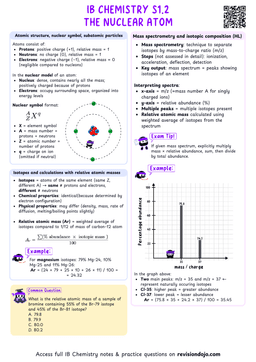
Each main energy level can hold a maximum of $2n^2$ electrons, where $n$ is the principal quantum number.
Electron Configuration Principles
Electron Capacity of Sublevels
- Each sublevel has a specific electron capacity based on the number of orbitals it contains:
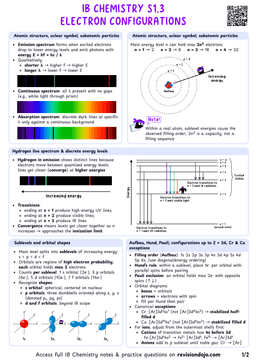
- s sublevel: 1 orbital → 2 electrons
- p sublevel: 3 orbitals → 6 electrons
- d sublevel: 5 orbitals → 10 electrons
- f sublevel: 7 orbitals → 14 electrons
- Each orbital can hold 2 electrons with opposite spins, as described by the Pauli exclusion principle later.
Aufbau Principle: Filling the Lowest Energy Orbitals First
- The Aufbau principle states that electrons fill orbitals in order of increasing energy.
- This means electrons will occupy the lowest-energy orbitals first before moving to higher-energy orbitals. The general order of orbital filling is:
$$1s < 2s < 2p < 3s < 3p < 4s < 3d < 4p < 5s < 4d < 5p < 6s < 4f < 5d < 6p$$
To remember the order of orbital filling, use the diagonal rule or refer to the periodic table, as it is structured according to the filling of sublevels.
Hund’s Rule: Maximizing Unpaired Electrons
- When electrons occupy orbitals of the same energy (degenerate orbitals), Hund’s rule states that electrons will fill each orbital singly before pairing.
- For example, in the 2p sublevel, the three p orbitals ($p_x$, $p_y$, $p_z$) will each get one electron before any of them gets a second.
- Consider nitrogen ($Z=7$).
- Its electron configuration is $1s^2 2s^2 2p^3$.
- The three electrons in the 2p sublevel will occupy the $p_x$, $p_y$, and $p_z$ orbitals singly, all with the same spin.
Pauli Exclusion Principle: Opposite Spins in the Same Orbital
- The Pauli exclusion principle ensures that no two electrons in the same orbital can have identical quantum numbers.
- This means that if two electrons share an orbital, one must have a spin of $+\frac{1}{2}$ (up arrow) and the other $-\frac{1}{2}$ (down arrow).
Do not place more than two electrons in a single orbital or assign the same spin to both electrons in an orbital.
Writing Electron Configurations
Full Electron Configurations
To write the full electron configuration of an atom, follow the Aufbau principle and distribute electrons among the orbitals based on the atomic number of the element.
Write the electron configuration for phosphorus (Z=15).
Solution
- Distribute the 15 electrons:
- 1s: 2 electrons → $1s^2$
- 2s: 2 electrons → $2s^2$
- 2p: 6 electrons → $2p^6$
- 3s: 2 electrons → $3s^2$
- 3p: 3 electrons → $3p^3$
- Full configuration: $1s^2 2s^2 2p^6 3s^2 3p^3$
Condensed Electron Configurations
- Condensed configurations use the noble gas core to simplify notation.
- The inner electrons are represented by the electron configuration of the previous noble gas.
The condensed configuration for phosphorus ($Z=15$):
- The noble gas preceding phosphorus is neon $([Ne] = 1s^2 2s^2 2p^6)$.
- Replace the inner electrons with $[Ne]$, and add the valence electrons: $3s^2 3p^3$.
- Condensed configuration: $[Ne] 3s^2 3p^3$
Write the condensed configuration for Krypton (Z = 36)
Solution
- The noble gas preceding krypton is argon, with the electron configuration:
$$[Ar] = 1s^2 2s^2 2p^6 3s^2 3p^6$$ - To write the condensed configuration for krypton, replace the inner electrons with $[Ar]$ and add the remaining electrons:
$$4s^2 3d^{10} 4p^6$$ - Condensed configuration:
$$[Ar] 4s^2 3d^{10} 4p^6$$
Electron Configurations of Ions
- The electron configuration of an ion is determined by the gain or loss of electrons relative to its neutral atom.
- Cations (positively charged ions) form when an atom loses electrons, while anions (negatively charged ions) form when an atom gains electrons.
- Cations: Electrons are removed from the outermost energy level (highest principal quantum number).
- Anions: Electrons are added to the outermost sublevel following the Aufbau principle.
- Transition Metal Ions: For transition metals, electrons are typically removed from the s sublevel before the d sublevel when forming cations.
$Na: 1s^2 2s^2 2p^6 3s^1$ → $Na^+: 1s^2 2s^2 2p^6$
$Cl: 1s^2 2s^2 2p^6 3s^2 3p^5$ → $Cl^-: 1s^2 2s^2 2p^6 3s^2 3p^6$
$Fe: [Ar] 3d^6 4s^2$ → $Fe^{2+}: [Ar] 3d^6$
Electron configurations of ions help explain chemical reactivity, stability, and bonding behavior.
Orbital Diagrams
- Orbital diagrams are a visual representation of electron configurations.
- Each orbital is represented by a box, and electrons are shown as arrows.
- An upward arrow ($↑$) represents an electron with spin $+\frac{1}{2}$, and a downward arrow ($↓$) represents an electron with spin $-\frac{1}{2}$.
Orbital Diagram for Nitrogen (Z=7)
- Step 1: Write the electron configuration: $1s^2 2s^2 2p^3$.
- Step 2: Draw boxes for each orbital:
- 1s: one box
- 2s: one box
- 2p: three boxes (px, py, pz)
- Step 3: Fill the boxes according to the Aufbau principle, Hund’s rule, and the Pauli exclusion principle:
- 1s: $↑↓$
- 2s: $↑↓$
- 2p: $↑ ↑ ↑$ (one electron in each p orbital)
Practice drawing orbital diagrams alongside writing electron configurations to reinforce your understanding of electron placement.
Orbital Diagram for Oxygen (Z = 8)
- Step 1: Write the electron configuration
- Oxygen has 8 electrons, so its electron configuration is: $1s^2 2s^2 2p^4$.
- Step 2: Draw boxes for each orbital
- 1s: one box
- 2s: one box
- 2p: three boxes for $p_x$, $p_y$, $p_z$
- Step 3: Fill the boxes following Aufbau principle, Hund's rule, and Pauli exclusion principle
- 1s orbital: $↑↓$ (completely filled)
- 2s orbital: $↑↓$ (completely filled)
- 2p orbital: $↑↑↑↓$ (first fill each p orbital singly, then pair up)
- Orbital diagram representation:
- 1s: $↑↓$
- 2s: $↑↓$
- 2p: $↑$ $↑$ $↓$
Exceptions to the Aufbau Principle: Chromium and Copper
Chromium (Z=24)
- The predicted configuration is $[Ar] 4s^2 3d^4$, but the actual configuration is $[Ar] 4s^1 3d^5$.
- This occurs because a half-filled d sublevel (five electrons) is more stable due to reduced electron repulsion and increased exchange energy.
Copper (Z=29)
- The predicted configuration is $[Ar] 4s^2 3d^9$, but the actual configuration is $[Ar] 4s^1 3d^{10}$.
- This is because a fully filled d sublevel (ten electrons) is more stable for similar reasons.
These exceptions arise due to the stability associated with symmetrical electron arrangements in half-filled and fully filled sublevels.
- What are the three principles that govern electron configurations, and how do they apply to orbital diagrams?
- Write the full and condensed electron configurations for chlorine ($Z=17$).
- Draw the orbital diagram for oxygen ($Z=8$).
- Explain why the electron configuration of chromium is $[Ar] 4s^1 3d^5$ instead of $[Ar] 4s^2 3d^4$.