Practice Reactivity 3. What are the mechanisms of chemical change? with authentic IB Chemistry exam questions for both SL and HL students. This question bank mirrors Paper 1A, 1B, 2 structure, covering key topics like atomic structure, chemical reactions, and organic chemistry. Get instant solutions, detailed explanations, and build exam confidence with questions in the style of IB examiners.
Paper
Level
Question 1
HLPaper 1A
The iron(III) ion forms the complex ion shown.
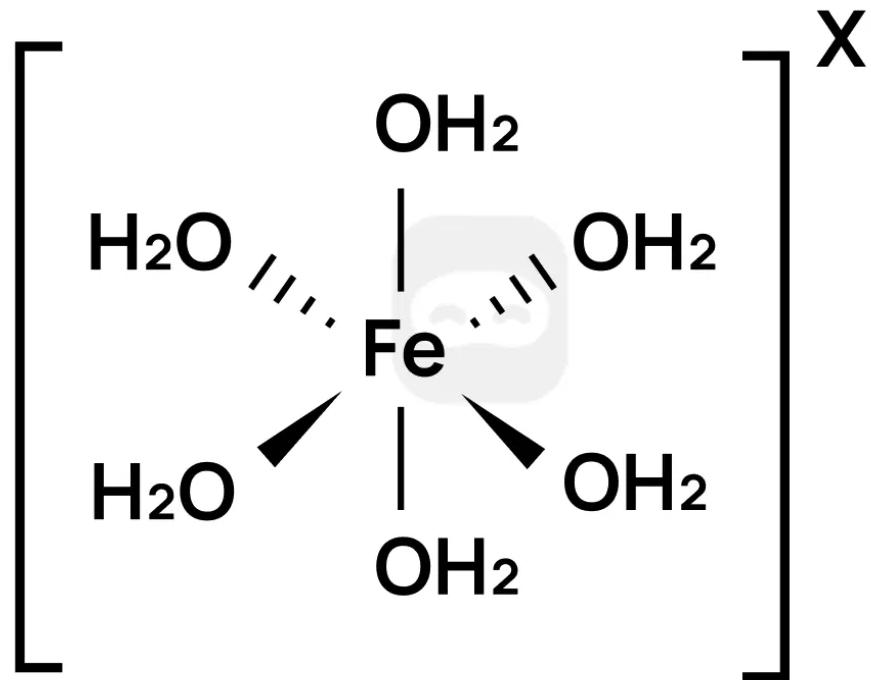
Which statements are correct?
I. The charge on the complex ion is 3+
II. The water molecules are acting as Lewis bases
III. The complex ion forms a coloured solution
Question 2
SL & HLPaper 1A
Which of the following is not a nucleophile?
Question 3
SL & HLPaper 1A
The apparatus for the electrolysis of molten sodium chloride is shown.
Which statement is correct?
Question 4
SL & HLPaper 1A
Which of the following is always true in a redox reaction?
Question 5
HLPaper 1A
The acid-base indicator phenol red, , changes colour from yellow to red over a pH range of --. Which statement is correct?
Question 6
SLPaper 1A
Which compound can be oxidised when heated with an acidified solution of potassium dichromate(VI)?
Question 7
HLPaper 1A
Which combination of acid and base is most likely to have a pH of 8.5 at the equivalence point in a titration?
Question 8
SLPaper 1A
What is the major product of the reaction between and but-2-ene?
Question 9
SLPaper 1A
Which statement is correct?
Question 10
HLPaper 1A
What are the products of electrolysis when concentrated calcium bromide solution is electrolysed using graphite electrodes?
| Product at cathode (negative electrode) | Product at anode (positive electrode) | |
|---|---|---|
| A. | hydrogen | bromine |
| B. | calcium | oxygen |
| C. | calcium | bromine |
| D. | hydrogen | oxygen |