What Makes Something Alive
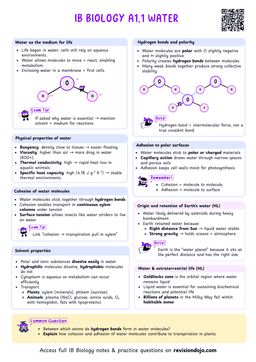
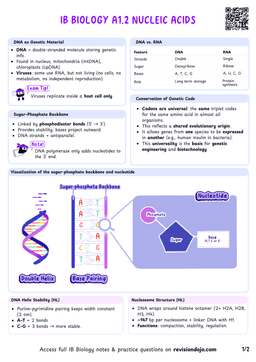
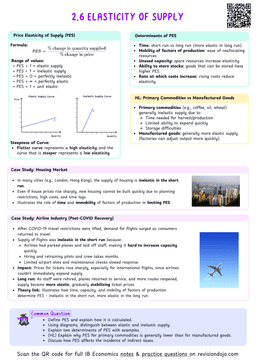
- All living organisms share a set of functions that define life.
- Cells are the smallest units capable of carrying out these functions independently.
Note
Viruses, although containing genetic material, do not meet these criteria and are therefore non-living.
The Characteristics of Living Things
- Living organisms can be distinguished from non-living matter by a universal set of functions of life:
- Metabolism: Chemical reactions that convert energy and build molecules (e.g., respiration, photosynthesis).
- Reproduction: The ability to produce offspring and pass on genetic information.
- Homeostasis: Maintaining a stable internal environment despite external changes.
- Growth: Increasing in size or cell number.
- Response to Stimuli: Detecting and reacting to changes in the environment.
- Excretion: Removing waste products from metabolism.
- Nutrition: Acquiring energy and materials, either by producing food (autotrophs) or consuming others (heterotrophs).
- Non-living things, like rocks or water, may change over time but do not perform these functions internally.
Exam technique
- Use MR H GREN to quickly recall the seven functions in structured or list-based questions:
- Metabolism
- Reproduction
- Homeostasis
- Growth
- Response
- Excretion
- Nutrition
Cells: The Smallest Units of Life
Definition
Self-sustaining life
The ability of a system to maintain and regulate its internal order and functions (metabolism, energy use, repair, reproduction) independently, without requiring assembly from external agents.
- Key properties of cells:
- Metabolic regulation: Cells use energy (ATP) to maintain internal order. Without energy, they lose structure and die.
- Reproduction: Cells divide to form new cells, ensuring continuity of life.
- Independent survival: Unicellular organisms (like Paramecium) can live entirely on their own.
Example
A single Amoeba eats, moves, excretes, and reproduces, all within one cell.
Why Organelles Are Not Alive
- Organelles perform specialized tasks inside cells, but none can live independently.
- For example:
- Mitochondria carry out respiration but depend on the rest of the cell for proteins and regulation.
- Chloroplasts photosynthesize but cannot reproduce or maintain homeostasis on their own.
Hint
- The defining test for “life” is whether something can sustain itself independently.
- Organelles fail this test, they contribute to life but are not alive themselves.
Are Viruses Living or Non-Living?
- Viruses blur the boundary between life and non-life.
- Structure: Genetic material (DNA or RNA) encased in a protein coat — sometimes with a lipid envelope.
Evaluation against the functions of life
| Function | Do Viruses Perform It? | Explanation |
|---|---|---|
| Metabolism | X | No enzymes or organelles, metabolically inert. |
| Reproduction | X | Can only replicate inside a host cell. |
| Homeostasis | X | No internal regulation. |
| Growth | X | Assembled as complete particles; do not grow. |
| Response to stimuli | X | No sensory or response mechanisms. |
| Excretion | X | Do not produce or remove waste. |
| Nutrition | X | Do not consume or generate nutrients. |
Analogy
- A virus is like a USB drive.
- It carries code (genetic information) but can only “run” when plugged into a host system.
Self review
- List the seven functions of life.
- What defines a cell as the smallest unit of life?
- Why can a single-celled organism perform all functions of life?
- Why are organelles not considered living?
- What structural components do viruses contain?
- Which functions of life do viruses fail to perform?
- Why can viruses reproduce only inside host cells?
- What key criterion distinguishes living from non-living systems?