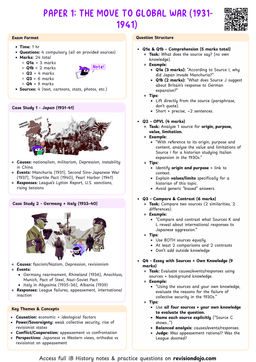
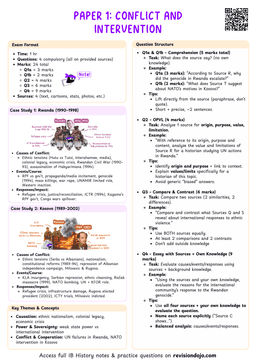
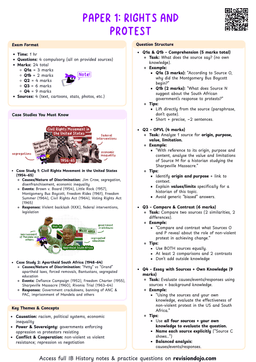
Post-WWII Vacuum: Following the Japanese surrender in 1945, the US and the Soviet Union agreed to divide Korea at the 38th parallel. The Soviets occupied the North, while US forces occupied the South.
Failure of Trusteeship: Roosevelt’s vision for a UN-supervised trusteeship failed. As Cold War tensions rose, the 38th parallel hardened into a political border rather than a temporary administrative line.
Note
The division was initially intended to be temporary.
However, the failure to agreeon a unified government led to the creation of two separate states in 1948: the Republic of Korea (South) and the Democratic People's Republic of Korea (North).
Internal Ambitions for Unification
Kim Il-Sung’s Determination: The North Korean leader, Kim Il-Sung, was a strong nationalist and communist who was determined to reunify the peninsula. He viewed the South Korean government as a puppet of the US and a continuation of colonial subjugation.
Pressure on Allies: It was Kim, not Stalin, who initiated the push for war. He spent 1949 persistently lobbying Stalin for military support and approval to invade the South, arguing that the South Korean population would rise up to welcome him.
Common Mistake
A common misconception is that the Korean War was purely a product of Soviet aggression.
In reality, it began as a civil conflict driven by the North Korean leadership's desire for unification, for which they sought Soviet backing.
Syngman Rhee’s Aggression
Authoritarian Rule: The South Korean leader, Syngman Rhee, was an authoritarian anti-communist who also wished to unify Korea by force.
US Restraint: The US feared Rhee’s aggressive rhetoric would provoke a war. Consequently, the US refused to provide Rhee with heavy armaments (tanks and aircraft), leaving the South militarily weaker than the North.
Soviet Strategic Calculations
Changing Balance of Power: By 1950, Stalin’s initial reluctance to support an invasion changed due to two key events:
Unlock the rest of this chapter with aFreeaccount
Nice try, unfortunately this paywall isn't as easy to bypass as you think. Want to help devleop the site? Join the team at https://revisiondojo.com/join-us. exercitation voluptate cillum ullamco excepteur sint officia do tempor Lorem irure minim Lorem elit id voluptate reprehenderit voluptate laboris in nostrud qui non Lorem nostrud laborum culpa sit occaecat reprehenderit
Definition
Paywall
(on a website) an arrangement whereby access is restricted to users who have paid to subscribe to the site.
anim nostrud sit dolore minim proident quis fugiat velit et eiusmod nulla quis nulla mollit dolor sunt culpa aliqua
Lorem ipsum dolor sit amet, consectetur adipiscing elit. Sed do eiusmod tempor incididunt ut labore et dolore magna aliqua. Ut enim ad minim veniam, quis nostrud exercitation ullamco laboris nisi ut aliquip ex ea commodo consequat.
Duis aute irure dolor in reprehenderit
Duis aute irure dolor in reprehenderit in voluptate velit esse cillum dolore eu fugiat nulla pariatur. Excepteur sint occaecat cupidatat non proident, sunt in culpa qui officia deserunt mollit anim id est laborum.
Note
Lorem ipsum dolor sit amet, consectetur adipiscing elit, sed do eiusmod tempor incididunt ut labore et dolore magna aliqua. Ut enim ad minim veniam quis nostrud exercitation.
Excepteur sint occaecat cupidatat non proident
Nemo enim ipsam voluptatem quia voluptas sit aspernatur aut odit aut fugit, sed quia consequuntur magni dolores eos qui ratione voluptatem sequi nesciunt. Neque porro quisquam est, qui dolorem ipsum quia dolor sit amet, consectetur, adipisci velit.
Tip
Lorem ipsum dolor sit amet, consectetur adipiscing elit, sed do eiusmod tempor incididunt ut labore et dolore magna aliqua. Ut enim ad minim veniam, quis nostrud exercitation ullamco laboris nisi ut aliquip ex ea commodo consequat.
Lorem ipsum dolor sit amet, consectetur adipiscing elit.
Sed do eiusmod tempor incididunt ut labore et dolore magna aliqua.
Ut enim ad minim veniam, quis nostrud exercitation ullamco laboris.
Duis aute irure dolor in reprehenderit in voluptate velit esse cillum.
End of article
Want a cheatsheet?
View a summary cheatsheet for Cold War Crises - Korean War (1950-1953)