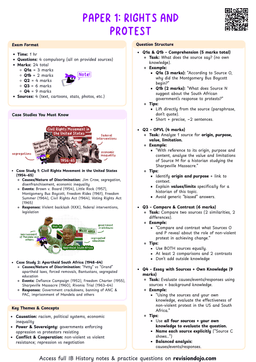
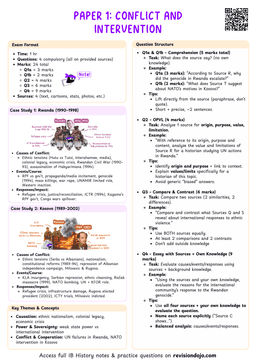
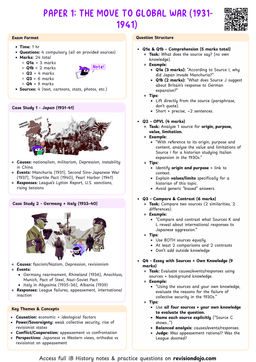
The Sino-Japanese War (1937-1941): Growing Japanese aggression
- As we have studied, the invasion of Manchuria in 1931 was done by the Kwantung Army without the approval of the Japanese government.
- It is not fully clear what Emperor Hirohito thought about the army’s takeover of Manchuria, but he took no action and made no public comment.
- The Kwantung Army took more preeminence in Japanese domestic politics.
- From May 1932 onwards, governments needed to have the authorization of the army and accept military demands.
- Japanese politics became very unstable, with ten different administrations between 1932-1941.
- Ultra nationalism grew in Japan during the 1930s
- Especially stimulated by public education in schools and universities that had mandatory readings that enshrined the divine nature of the Emperor and the duty of every Japanese to serve him and the Nation.
- The Manchurian invasion made it easier for aggressive nationalism to take hold
- As the official reason for Manchuria had been the idea of “self defense” and the “attack” that China had inflicted on the railway in Mukden.
- Furthermore, the 1930s saw the dissemination of the perspective that Japan had a “special destiny” to lead Asia and to free Asia from Western hegemony.
- After Japan secured Manchuria, the expansion continued.
- By 1936, most of Northern China was controlled by Japan.
- China attempted to rule some of the demilitarized zones, but they failed.
- In July 1937, the Marco Polo incident opened a new phase in the clash between Japan and China.
- The Marco Polo Bridge Incident occurred near Beijing, when Japanese and Chinese troops clashed.
- A missing Japanese soldier sparked fighting, which escalated rapidly.
- This skirmish marked the start of full-scale war between China and Japan, leading to the Second Sino-Japanese War.
Historiography
- According to the supporters of the “civilian-military split thesis”, the period between 1931 and 1945 was one where an ultra nationalist “militaristic clique” took control of government in Japan and forced a change in foreign policy that led to imperialism and fascism.
- The challenge to the “civilian-military split thesis” argues that Japanese expansionism was a strategy put forward both by the military and by civilians.
- China’s nationalist speech, the needs of the Great Depression and even the growing power of the USSR after Stalin rose to power are the factors that explain the expansion.
Exam technique
- In Paper 1 historiography is not needed for building a strong source based essay.
- Nevertheless, it is a good idea to start noting these different perspectives to integrate them in essay writing practice for Papers 2 and 3.
- Which perspective looks stronger?
- The “civilian-military split thesis” or the one that criticizes it?
- An evaluation of perspectives can be a key tool to get a 7 in your essays.
Note
- The Marco Polo Bridge Incident was the trigger for the start of the Second Sino-Japanese War.
- The Japanese troops stationed near the Marco Polo bridge organized a training exercise on the night of July 7th, 1937.
- During the training, shots were exchanged with Chinese troops that were in a nearby garrison. It is unclear who fired first.
- A Japanese soldier was reported missing and Japan demanded to inspect a town near the bridge. China refused.
- The soldier returned by his own means. The missing soldier was a clear excuse put forward by Japan to start skirmishes that rapidly evolved into full out conflict.
Note
The war between China and Japan that starts in 1937 is called the Second Sino Japanese War because there was a first war between the countries in the late 19th C.
Development of the War
The development of the war can be organized in three phases.
- Phase 1 (1937-38) saw the rapid advance of the Japanese towards the South of Manchuria and Jehol and the establishment of bases in the Eastern coast.
- Between November and December 1937, the Japanese conquered Shanghai and Nanjing.
- By mid 1938, Japan had conquered a relevant region in Northern and Eastern China, controlling around 170 million Chinese.
- At that moment, the Chinese Nationalists´ strategy changed to a defensive war.
- Phase two (1939-1944) was characterized by a war of attrition.
- The Chinese looked towards a “Sustained strategy of attrition” in the words of Chiang Kai Shek and refused negotiations, hoping to wear down the enemy through a long conflict.
- Japanese troops used more force and terror to break Chinese resistance but were unsuccessful. In 1940 and 41, Japan made two huge strategic bombings but was still unable to marr Chinese morale.
- After Pearl Harbor, in December 1941, Japan had to allocate resources to its participation in the Second World War and the conflict in China further stalemated.
- Phase three (1944-1945) started with Operation Ichigo in 1944.
- The Japanese impacted the GMD forces gravely: not only 500,000 soldiers were killed, but also many factories under the control of China were destroyed.
- During the first half of 1945, the focus of Japan was once again Manchuria, because the Communist army under Mao had gained prominence there.
- In August 1945, Soviet troops occupied Manchuria.
- The war ended because of Japan's unconditional surrender in WW2 after two atomic bombs were dropped on Hiroshima and Nagasaki in August 1945.
Case study
Rape of Nanjing
- Nanjing is one example of the terror and violence displayed by Japan during its expansion in China.
- The so called Rape of Nanjing was a brutal massacre committed by Japanese troops.
- Over six weeks, soldiers killed between 200 and 300000 Chinese civilians and excruciating tales of torture and punishment, with widespread rape and looting have left lasting trauma.
- Japan thought that after Nanjing Chiang Kai Shek would try to negotiate peace, but instead Chinese troops moved westwards.
- They opened the dikes of the Yellow River in order to slow down the Japanese.
- In this operation at least half a million Chinese soldiers drowned.
Historiography
- For some historians, the invasion of Manchuria and the war that starts in 1937 should be seen as separate conflicts.
- The evidence for this is that Japan stayed in Manchuria for a number of years before launching a full-on invasion of the South and the East.
- For others, the two events are linked.
- In this sense, the easy way in which Japan took over Manchuria fed Japanese ambitions and made them think that the Chinese forces would be easily defeated.
- Which perspective do you find stronger? Why?
Note
The details of the development of the war would be an unlikely topic for a Paper 1, but they are very useful if you are working with Topic 11: Causes and effects of 20th Century wars in Paper 2.
Sino-Japanese War (1937-1941) - Responses
Chinese response: the Second United Front
- Since the defeat of the Warlords in 1927, the GMD had been fighting the Chinese Communist Party (CCP), led by Mao Zedong.
- But with the expansion of Japan, and under the pressure of his own Generals, Chiang Kai Shek agreed to form an alliance with the communists in order to defeat the Japanese. This was the Second United Front.
- There were some agreements and compromises between Mao and Chiang, but even though the Second United Front came into existence, the GMD and the CCP did not meet eye to eye.
- During the Second Sino Japanese war, the GMD and the CCP continued to have tensions and some actual fighting.
- Chiang is famously known to have expressed that the “Japanese are a disease of the skin, but the Communists are a disease of the hearth”.
- As we have seen in the previous section, the war waged by Chiang had a significant resistance and attrition strategy, while the CCP was more assertive in its confrontation with Japan.
- Chiang had virtually abandoned Manchuria because most of his high ranking officers and support did not come from that area.
- It was Mao that did the heavy lifting against Japan in the Manchuria region and others.
- According to Japanese sources, 75% of the engagements they had fought in China since 1937 and up to 1945 were against the communists.
Note
For more information about the complex relations between the GMD and the CCP, see the section on Paper 2: Authoritarian States - Mao Zedong in China.
Note
- The Sino Japanese war cemented Mao´s popularity and cult of personality, for the communists were perceived as the “real” nationalists, while Chiang and the GMD were seen as passive and corrupt.
- It also allowed Mao to get control of some rural areas in Eastern China.
- More information about this issue can be found in Paper 2 Topics 10 and 11.
The League of Nations' response
- There was little the League could do.
- Not only by 1937 it had lost most of its legitimacy, but in the late 1930s, Europe was consumed by the expansion of Hitler, the rise of Franco in Spain and the growing strength of Mussolini.
- Also, the countries in the League (except for the USSR, that had joined in 1934) were lenient towards Japan as they represented anti communism and hoped they would curb Stalin in Asia.
- China was seen as a country of chaos, where no sustained unified government had been established since the fall of the Manchu dynasty: there was no consensus to intervene in any capacity.
- China appealed to the League, but Japan vetoed an international conference to discuss the situation. The League remained uninvolved.
Note
More information about the League´s weakness can be found in Paper 1: The Move to Global War - German and Italian expansion and in Paper 3 - Europe - Section 15: Diplomacy in Europe (1919 - 1945)
USSR's response
- Stalin initially favored the war: it meant the (at least temporary) suspension of hostilities between the GMD and the CCP, and it made Japan focused on inland China, instead of in Manchuria/Manchukuo, that bordered the USSR.
- The Soviets sent some ammunition, weapons and tanks to help the Chinese, and a loan of $173 million dollars.
- But overall they took the opportunity given by the chaos of war and instability to get control over some territories.
- This involvement stopped after 1941, when Germany started Operation Barbarossa and the Soviets had to defend themselves from the Nazi attack.
US' response
- In order to preserve its trade with China, the US did not get involved in a significant way.
- In the beginning, they stopped selling weapons to Japan and China as a form of “protest”, but oil, that was essential for Japan's war effort, continued to be sold by the Americans.
- US only made a loan to China of 25 million dollars in 1938 and became more interested in the conflict once Japan started attacking territories outside of China, in 1940.
Note
- The information about the Rape of Nanjing and the sinking of a small American vessel by Japan may have helped the American be a little more assertive in their support to China.
- In October 1937, President Roosevelt delivered his “Quarantine Speech,” addressing rising global aggression, including Japan’s invasion of China.
- He advocated for international opposition to lawless nations through peaceful means, but there was no practical follow up.