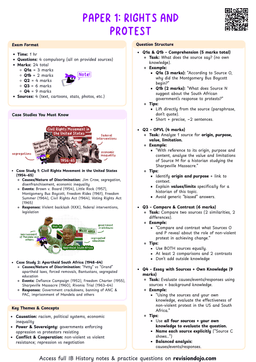
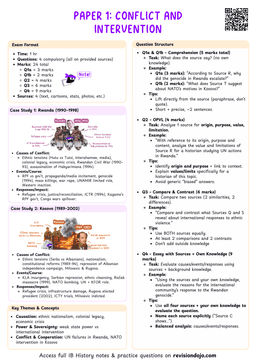
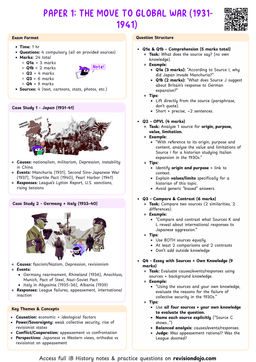
Italian expansion: Abyssinia (1935-1936) Events
- We have already mentioned the Abyssinian crisis on several occasions.
- The events in Abyssinia (present day Ethiopia) during 1935-1936 marked a critical moment for both international diplomacy and Mussolini’s strategic direction.
- Italy’s military campaign in Ethiopia significantly altered the balance of its foreign relations, straining ties with Britain and France and gradually nudging Mussolini toward alignment with Nazi Germany.
- At the same time, the League of Nations suffered another major setback.
- After its earlier inability to act decisively in Manchuria, its failure to prevent aggression in Abyssinia severely damaged its credibility and influence on the world stage, perhaps to a point of no return.
What were Mussolini’s aims in invading Abyssinia?
- He wanted to grow his African Empire and take revenge for Italy having been defeated by Abyssinia in 1896.
- Abyssinia was part of Mussolini’s spazio vitale/ultra nationalist ideology: Italy had failed to get new colonies as a result of the 1919-1920 peace treaties.
- Part of Mussolini’s ideological project was also to restore the glory of the ancient Roman Empire, so getting part of North Africa felt as a natural step.
- Regardless of which was the main motivation for Mussolini going to Abyssinia, without a doubt he also did it because he could do it. In particular, he was confident that neither the League nor Britain or France would take action against him.
- He had helped Austria in 1934 to prevent Anschluss, which made him look good in the eyes of the League, Britain and France.
- In April 1935, he had signed the Stresa Front with Britain and France as a deterrence against Hitler.
- As you know, this was a collective security agreement that secured his good relations with Britain and France and in a way conditioned any action that Britain and France could take against Mussolini.
Historiography
- There is a historiographical debate surrounding the reasons for Mussolini’s interest in Abyssinia.
- For Denis Mack Smith, the decision to invade Abyssinia in 1935 was largely driven by domestic economic pressures and a desire to divert attention from Italy’s internal problems.
- He emphasizes that Mussolini needed a victory to rally public support, provide a distraction from unemployment and stagnation, and offer opportunities for new markets and raw materials.
- More information on this domestic economic issue can be found in Paper 2 - Topic 10: Authoritarian States.
- AJP Taylor, on the other hand, highlights fascist ideology and imperial ambition as the core motives.
- He suggests Mussolini aimed to build a new Roman Empire, asserting Italian power through militarism and conquest, reflecting the fascist ideals of strength, nationalism, and expansion.
- Again, when you’re taking notes try to find evidence to support both points of view and establish which looks stronger to get to the upper band marks in your essays.
Abyssinia - The events
- Mussolini had been planning the invasion at least since 1932, but the opportunity presented itself in 1934 with the Wal Wal incident.
- The Wal Wal incident occurred at an oasis along the disputed border between Italian Somaliland and Ethiopia, where Italian colonial troops and Ethiopian forces had a small clash over territorial claims.
- This skirmish heightened tensions between the two nations and provided Italy with a pretext for its subsequent military aggression, which culminated in the invasion of Abyssinia in early October 1935.
- Before the invasion, the Emperor of Abyssinia, Haile Selassie, appealed several times to the League of Nations for help, but they did not take action until the war actually began.
- Against Mussolini’s prediction, the League did sanction Italy with economic penalties in October 1936. Mussolini completed the invasion in 1936 and Haile Selassie went into exile.
Case study
Haile Selassie
- Born in 1892 Haile Selassie was the Emperor of Ethiopia during the Abyssinian Crisis.
- Under his leadership, Abyssinia joined the League of Nations in 1923, seeking international legitimacy and protection against imperialist threats.
- After Italy’s 1935 invasion, Selassie went into exile and delivered a historic appeal to the League in 1936, becoming a global symbol of resistance to fascism.
- He gained spiritual significance in Jamaica, where the Rastafari movement hailed him as a messianic figure following his 1966 visit, which drew massive crowds and deepened his international legacy beyond politics.
- Bob Marley’s famous song, “War” takes its lyrics almost entirely from Haile Selassie’s 1963 speech to the United Nations, where he denounced racism and called for peace and equality.
The Invasion of Abyssinia - Responses
The League of Nations’ Response
- Contrary to Mussolini’s expectations, the League voted in favor of economic sanctions on Italy.
- This was mostly due to public pressure in Britain, where public opinion was clearly in favor of taking a strong stand against the invasion.
- The economic sanctions included a banning on sales of weapons and some imports to Italy and an additional ban of loans to Mussolini.
- Nevertheless, the sanctions were not effective: they were introduced in late November (when the invasion was already well underway) and they did not include the banning on key military materials like iron, oil, steel and coal.
- Moreover, countries that were not part of the League, like Japan and the US, were not bound by the sanctions, and they continued their trading with Italy.
- Britain and France feared being at odds with Mussolini because that may bring Hitler and Mussolini together, and that is why they didn’t take more decisive action.
- But at the same time, they could not go against the claim of the population in their nations and had to support some type of punishment.
- But even when the response of the League was not assertive, Mussolini was angered by the sanctions.
- In December 1935 Sir Samuel Hoare (British foreign minister) and Pierre Laval (Prime Minister of France) reached a secret agreement in Paris that two thirds of Abyssinia should be offered to Italy, and the Emperor Haile Selassie be compensated with land elsewhere instead.
- But the news was leaked out in the press and the agreement didn’t go through.
Case study
The press had a crucial role in the development of the scandal of the Hoare-Laval pact.
- The British press played a critical role in exposing and condemning the Hoare–Laval Pact.
- When details of the secret plan were leaked to the French newspaper Le Journal in mid-December 1935, it quickly became headline news across Europe.
- British newspapers, such as The Times and the Daily Mail, reacted with outrage, accusing the government of hypocrisy for undermining the League of Nations while publicly claiming to support Abyssinia.
- The press backlash fueled public protest and forced Hoare’s resignation, demonstrating the growing power of public opinion and media in shaping foreign policy.
- For Laval, the scandal badly damaged his credibility, and in January 1936 he was dismissed by French President Albert Lebrun due to mounting political pressure and a broader government crisis.
Hint
- If you are looking for an Internal Assessment topic, the role that the press can have in historical events can work as a starting point.
- It is not difficult to find primary sources, and it also works as a very significant and current theme.
Political Responses
- As a consequence of the invasion of Abyssinia, the Stresa Pact waned and was discarded.
- Italy’s invasion of Abyssinia strengthened Mussolini’s willingness to challenge international norms, and contributed to Hitler’s reoccupation of the Rhineland while global focus was elsewhere.
- Mussolini began aligning more closely with Hitler: in late 1936, Germany and Italy formalized their partnership through the Rome-Berlin Axis.
- The alliance between Hitler and Mussolini was fostered by their intervention in the Spanish Civil War (1936-9) in support of Franco. Mussolini’s contribution was mostly in the form of infantry, sending 70,000 troops to Spain.
- It is worth noting that the Italians performed poorly in Spain, and suffered a humiliating defeat in Guadalajara (1937).
- Nevertheless, the tighter bonds with Hitler prompted Mussolini to join the Anti Comintern Pact in 1936 and to leave the League of Nations in late 1937.
Historiography
- Why was there a rapprochement between Fascist Italy and Nazi Germany?
- For the intentionalist school, Mussolini’s alliance with Hitler was ideologically driven and long in the making.
- Both regimes shared militaristic, revolutionary aims and were disillusioned with the Versailles system.
- For the structuralist perspective, Italo-German alliance was a result of political isolation and short-term strategic interests.
- The evidence for this would be that Mussolini turned to Hitler primarily after the Abyssinian Crisis, when Britain and France condemned Italy's actions and imposed sanctions.