Practice Option F The Geography of Food and Health with authentic IB Geography exam questions for both SL and HL students. This question bank mirrors Paper 1, 2, 3 structure, covering key topics like physical geography, human geography, and geospatial analysis. Get instant solutions, detailed explanations, and build exam confidence with questions in the style of IB examiners.
Paper
Level
Question 1
SL & HLPaper 1
The graph shows the amount of global food aid in millions of tonnes, from 2000 to 2011.
1.[1]
Identify the year in which global food aid was greatest
2.[1]
State the year in which global aid given directly by a donor country was highest.
3.[2]
Describe the trends in food aid between 2000 and 2011.
4.[6]
Explain two possible disadvantages of food aid for a community that is currently experiencing food shortages.
5.[10]
“Prevention should always be prioritized over treatment.” Discuss this statement, with reference to specific diseases and communities.
Question 2
SL & HLPaper 1
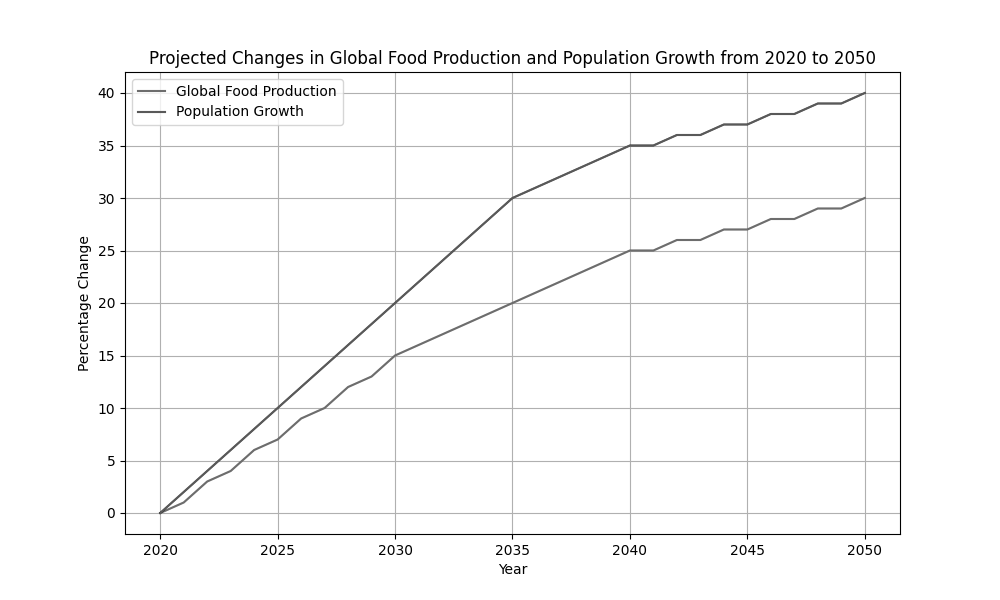
The diagram shows the projected changes in global food production and population growth from 2020 to 2050. The y-axis represents the percentage change, and the x-axis represents the years from 2020 to 2050.
1.[1]
State the percentage change in global food production in the year 2035
2.[1]
Identify the percentage change difference between global food production and population growth in 2040
3.[2]
Describe the trends in global food production and population growth from 2020 to 2050 as shown in the diagram.
4.[6]
Explain two possible reasons for the slowdown in the rate of increase in global food production after 2040.
5.[10]
Evaluate the effectiveness of one technological and one policy intervention that could help address the projected mismatch between global food production and population growth.
Question 3
SL & HLPaper 1
The graph shows the density of doctors, nurses, and midwives in the 57 countries with critical health workforce shortage (HRH crisis countries)
Source: World Health Organisation (WHO)
1.[1]
Identify the country with the lowest density of doctors, nurses, and midwives in the graph.
2.[1]
Identify the critical density threshold per 1,000 population, as used in the graph.
3.[2]
Outline one reason why a low health workforce density can limit access to healthcare in these countries.
4.[6]
Explain two factors—economic, political, or geographical—that contribute to persistent healthcare workforce shortages in these countries.
5.[10]
"Strengthening the health workforce is the most critical step toward achieving universal health coverage."
To what extent do you agree with this statement?
6.[10]
Evaluate the impact of health worker shortages on the achievement of Sustainable Development Goal 3 (Good Health and Well-being) in low-income countries.