System
A system is a set of interacting or interdependent components that work together to form a functional whole.
- The concept of systems lies at the heart of Environmental Systems and Societies (ESS).
- It provides a structured way to study interconnections between living and non-living components and to understand how these interactions maintain balance within the environment.
- It is composed of components, living or non-living, that interact to create a functioning whole.
- These components are linked by the flows of energy and matter, which allow ecosystems and societies to operate in balance.
- Environmental systems, such as forests or cities, are dynamic.
- They constantly change in response to internal interactions and external influences.
Key Characteristics of Systems
- Interdependence: Every component affects and is affected by others.
- Organization: Components are structured hierarchically, creating systems within systems (e.g., a pond within a watershed within the hydrosphere).
- Inputs and Outputs: Systems receive inputs (like solar energy) and produce outputs (like heat energy or waste).
- Boundaries: Define what is part of the system and what lies outside it.
- Think of a system like the human body.
- The lungs, heart, and brain are separate parts, but together they sustain life.
- If one fails, the entire system is affected, just as deforestation impacts soil fertility, water cycles, and climate.
The Systems Approach
Systems approach
A systems approach is a way of looking at complex situations by focusing on the interactions and interdependencies between different components within a system.
- A systems approach is a holistic way of viewing complex interactions within ecological or societal contexts.
- It focuses on the relationships and feedback among components rather than studying each element in isolation.
- It contrasts with a reductionist approach, which breaks systems into individual parts to study them separately.
- While reductionism provides detailed insights into specific processes, it cannot explain emergent properties, characteristics that appear only when all parts interact.
Holistic Approach
- Focuses on interconnections between components and feedback mechanisms.
- Allows scientists to predict system-wide effects (e.g., how deforestation impacts climate, biodiversity, and soil quality together).
- Helps identify points of balance or imbalance, making it essential for sustainable resource management.
Reductionist Approach
- Examines each component of a system independently.
- Useful for studying specific processes such as photosynthesis or nutrient uptake but does not show the full environmental picture.
Organization of Components
- Systems contain:
- Inputs: materials or energy entering the system (e.g., sunlight, rainfall, carbon dioxide).
- Storages: areas where energy or matter accumulate for a time (e.g., soil, biomass, ocean water).
- Flows: processes that move matter or energy within the system (e.g., photosynthesis, evaporation, respiration).
- Outputs: matter or energy leaving the system (e.g., heat loss, waste products, oxygen release).
- The interactions among these create a network that determines how stable or adaptable the system is.
- In a forest ecosystem:
- Inputs include sunlight, water, and carbon dioxide.
- Flows include nutrient uptake, photosynthesis, and respiration.
- Storages include plant biomass and soil organic matter.
- Outputs include oxygen, carbon dioxide, and heat energy.
Benefits of a Systems Approach
- It helps identify how changes in one part of the system can affect the whole system.
- It provides a comprehensive understanding of complex situations, guiding better decision-making and management, especially in environmental issues or social policies.
What is a Systems Diagram?
Systems diagram
A system diagram is a visual representation that shows how different components of a system interact with each other.
- Systems diagrams are simplified visual models used to represent flows of energy and matter and the relationships between system components.
- They make it easier to identify inputs, outputs, storages, and interactions, showing how environmental or social systems operate.
- Diagrams can illustrate anything from a tree to the global carbon cycle.
Key Components of Systems Diagrams
- Storages: Represented by rectangular boxes, storages are reservoirs where matter or energy is held.
- Flows: Represented by arrows, flows show the movement of matter or energy between storages or into and out of the system.
- Inputs and Outputs: Inputs are flows entering the system, while outputs are flows leaving the system.
- Boundaries: A line or enclosure that defines the limits of the system being studied.
- In a forest ecosystem, storage might include trees (biomass), soil nutrients, and herbivores.
- Flows could include photosynthesis (energy flow), nutrient cycling, and water evaporation.
Creating a Systems Diagram
- Identify main storages (e.g., atmosphere, soil, biomass).
- Determine flows connecting them (e.g., photosynthesis, respiration, transpiration).
- Indicate direction and relative magnitude if data are available.
- Label each process precisely (for example, “evaporation,” not just “water movement”).
Main Features
- Boxes or circles represent storages (quantities of energy or matter).
- Arrows represent flows, labeled with processes such as respiration or precipitation.
- Direction of arrows shows movement of matter or energy.
- Boundary lines define the limits of the system under study.
- When asked to draw a system diagram:
- Use boxes for storages and arrows for flows.
- Clearly label each process (e.g., photosynthesis, decomposition).
- Indicate direction of energy or matter movement.
- Include boundaries if relevant.
Uses of System Diagrams
- Provide a conceptual model for understanding ecosystem function and human impact.
- Allow visual comparison between natural and managed systems.
- Can represent data qualitatively (using size of arrows/boxes to indicate magnitude) or quantitatively (using measured values).
- Aid in identifying key processes, bottlenecks, and energy losses within a system.
Flows in a System
Flows
Flows are the processes that move energy, matter, or information within a system.
- Flows are the processes that connect storages, showing how matter and energy move or change within and between systems.
- Flows are categorized into transfers and transformations, which together form the basis of all environmental interactions.
1. Transfers (Change in Location)
Transfers
Transfers involve the movement of matter or energy from one place to another without changing its form.
- Represent the movement of energy or matter from one location to another without a change in form or composition.
- Usually involves physical relocation rather than conversion.
- Common in both abiotic and biotic processes.
- Water Movement: Water flowing from a river into the ocean is a transfer. The water remains in its liquid state but changes location.
- Energy in Food Chains: When a carnivore eats a herbivore, the chemical energy stored in the herbivore's body is transferred to the carnivore.
- Heat Transfer: Ocean currents move heat energy from warmer to cooler regions, redistributing thermal energy without changing its form.
2. Transformations (Change in Form)
Transformations
Transformations involve a change in the chemical nature, state, or energy type of matter or energy.
- Involve conversion of energy or matter from one form, state, or chemical nature to another.
- Are central to biological and chemical processes that sustain life.
- Matter to Matter: Plants convert soluble glucose into insoluble starch during photosynthesis.
- Energy to Energy: Solar panels transform light energy into electrical energy.
- Matter to Energy: Burning wood converts chemical energy stored in the wood into heat and light energy.
- Energy to Matter: Photosynthesis transforms light energy into chemical energy stored in glucose molecules.
Interactions Between Transfers and Transformations
- In real systems, transfers and transformations often occur simultaneously.
- For instance, in the water cycle, precipitation (transfer) may lead to infiltration (transfer) and later evaporation (transformation).
- These processes together maintain system equilibrium, ensuring that energy and matter continuously circulate within and between ecosystems.
- Don't confuse transfers with transformations.
- Remember, transfers involve movement without change, while transformations involve a change in form or state.
Significance of Flows
- Transfers and transformations ensure the continuous cycling of energy and matter, maintaining ecosystem balance.
- Understanding them helps explain how systems maintain equilibrium or become disrupted.
Types of Systems
- Every system operates within a boundary that separates it from its surroundings.
- Systems can be open or closed, depending on how they interact with their environment.
Open Systems
Open Systems
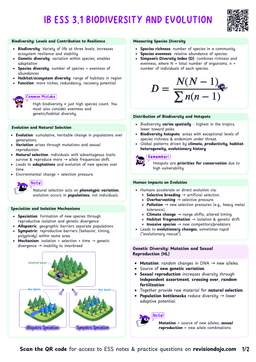
Open systems are systems that exchange both energy and matter with their surroundings.
- The majority of natural systems are open systems because they constantly exchange materials and energy with their environment.
- Inputs may include solar radiation, rainfall, nutrients, and organisms, while outputs may include heat, waste products, water, and gases.
- Open systems are dynamic, capable of responding to external changes through feedback mechanisms.
- Ecosystems: They take in sunlight, water, and nutrients and release heat and oxygen.
- Human body: Takes in food and water, releases heat and waste.
- Urban areas: Import energy and resources, export waste and pollutants.
Closed Systems
Closed Systems
Closed systems are systems that exchange energy but not matter with their surroundings.
- Exchange energy but not matter with their surroundings.
- Matter remains contained, circulating within the system, while energy enters and leaves (usually as heat or radiation).
- Closed systems are rare in nature but exist conceptually or experimentally.
Biosphere 2, an experimental closed ecological system built in Arizona, simulated global processes within a sealed structure to study self-sustaining environments.
Biosphere 2
- Built in Arizona in the late 1980s to study whether a sealed ecosystem could sustain human life.
- Contained multiple biomes: rainforest, ocean, desert, savanna, wetland, and eight human inhabitants.
- Despite advanced design, oxygen levels fell and ecological imbalances occurred (e.g., insect explosions, soil microbe oxygen consumption).
- Demonstrated how complex and sensitive closed systems are, and how difficult it is to recreate Earth’s equilibrium artificially.
Isolated Systems
Isolated system
An isolated system exchanges neither energy nor matter with its surroundings.
- These systems exist only as theoretical constructs; no isolated system is found naturally on Earth.
- The universe as a whole is sometimes considered the only true isolated system.
Earth as a Single Integrated System
- The Earth functions as one vast, self-regulating system comprising five natural subsystems plus the anthroposphere.
- Each sphere interacts continuously with the others through exchanges of energy and matter.
- Biosphere: All living organisms (plants, animals, microbes) and their interactions.
- Hydrosphere: All water on Earth, including oceans, rivers, lakes, and groundwater.
- Cryosphere: Frozen water, such as glaciers, ice caps, and permafrost.
- Geosphere: The solid Earth, including rocks, soil, and tectonic processes.
- Atmosphere: The layer of gases surrounding Earth, essential for climate and weather.
- Anthroposphere: Human activities and their impact on the environment.
These spheres exchange energy and matter, creating a dynamic system where changes in one sphere affect the others.
The Gaia Hypothesis (James Lovelock)
- The Gaia Hypothesis, proposed by James Lovelock in the 1970s, describes Earth as a self-regulating, living system that maintains the conditions necessary for life.
- Lovelock argued that living organisms interact with their inorganic surroundings to regulate factors such as temperature, atmospheric composition, and ocean salinity.
- Microbiologist Lynn Margulis later contributed evidence showing how microbial processes influence planetary chemistry.
While the strong Gaia hypothesis suggests that Earth actively self-regulates, the weaker version argues that living organisms simply influence environmental conditions in a way that enhances their own survival.
Key Principles
- Earth’s living organisms collectively influence the environment to maintain equilibrium.
- Life modifies its surroundings in ways that promote continued habitability (e.g., regulating CO₂ and oxygen).
- Negative feedbacks (stabilizing) dominate to preserve balance, though positive feedbacks (amplifying) can drive change.
The Daisyworld Model
- Lovelock and Watson created the Daisyworld simulation to demonstrate planetary homeostasis.
- The model features two types of daisies:
- Black daisies absorb more heat, warming the planet.
- White daisies reflect sunlight, cooling the planet.
- As the Sun brightens, white daisies thrive and cool the planet; when it dims, black daisies dominate, maintaining temperature stability.
- This simple feedback illustrates how biotic processes can regulate climate.
The Gaia hypothesis does not imply that Earth is a conscious organism but rather that feedbacks between life and environment act as a regulatory mechanism.
Systems at different Scales
Scales of Systems
- Systems exist at multiple spatial and temporal scales, from the microscopic to the planetary.
- Studying systems at different scales helps identify patterns and interactions that might not be visible at a single level.
- The principles of storages, flows, inputs, and outputs apply equally across all scales.
Examples of Scale
1. Micro-scale Systems
- Very small systems such as:
- A bromeliad plant holding water between its leaves, forming a tiny aquatic ecosystem.
- A terrestrial microhabitat like soil microbes decomposing leaf litter.
- These systems show inputs (sunlight, rainfall), storages (water, biomass), and outputs (gases, nutrients).
- Despite their size, they play essential roles in larger-scale nutrient and energy cycles.
- Bromeliads in tropical rainforests collect water in their leaves, creating microhabitats where insect larvae, frogs, and decomposers coexist.
- These micro-ecosystems illustrate nutrient cycling on a small scale while contributing to the overall productivity of the rainforest.
2. Meso-scale Systems
- Intermediate systems such as forests, lakes, wetlands, or grasslands.
- Include complex interactions between species, water cycles, and nutrient flows.
- Often the focus of field-based ecological research and conservation management.
3. Macro-scale or Global Systems
- Include planetary systems such as the global climate system, the carbon cycle, or atmospheric circulation.
- Governed by large-scale feedbacks linking all Earth spheres.
- The Gaia hypothesis and Earth System Science view these as overarching systems that determine planetary homeostasis.
- Atmospheric circulation distributing heat and moisture globally.
- Ocean currents transporting energy between hemispheres.
- The carbon cycle maintaining global balance of carbon among air, land, and sea.
Nested Hierarchies of Systems
- Systems are hierarchical.
- Smaller systems operate within larger ones.
- A tree system is part of a forest ecosystem.
- The forest ecosystem contributes to a biome such as a tropical rainforest.
- All biomes together make up the Earth system.
- Changes at small scales can accumulate to produce large-scale effects, a principle known as emergence.
Interconnectedness Across Scales
- Environmental issues must be studied at multiple scales:
- Local: Soil erosion on farms.
- Regional: Deforestation’s impact on rainfall.
- Global: Climate change and biodiversity loss.
- Local actions can generate global consequences, illustrating the interdependence of systems.
The draining of peatlands in one region releases CO₂ that contributes to global atmospheric change, demonstrating how local systems link to the global carbon cycle.
- Compare and contrast the reductionist and holistic approaches in environmental science.
- Describe the components of a system diagram and explain how it helps model ecosystem interactions.
- Distinguish between transfers and transformations in environmental systems, and explain their significance for energy and matter cycling.
- Describe how energy and matter move through open systems such as ecosystems.
- Discuss how the Earth functions as a single integrated system, referencing its major spheres.
- Outline the key ideas of the Gaia Hypothesis and explain how the Daisyworld model illustrates these ideas.