Understanding Application Software
Application software is essential for transforming raw data into meaningful information. It enables users to:
- Increase productivity: Automate tasks and streamline workflows.
- Enhance creativity: Provide tools for design and innovation.
- Facilitate communication: Connect people and share information globally.
Application software operates on top of system software, relying on the operating system to manage hardware resources and provide a user interface.
Over the years, application features have evolved significantly, driven by advancements in technology and user expectations.
There are two main application interface types: graphical user interfaces (GUI) and command line interfaces (CLI).
Graphical user interface (GUI)
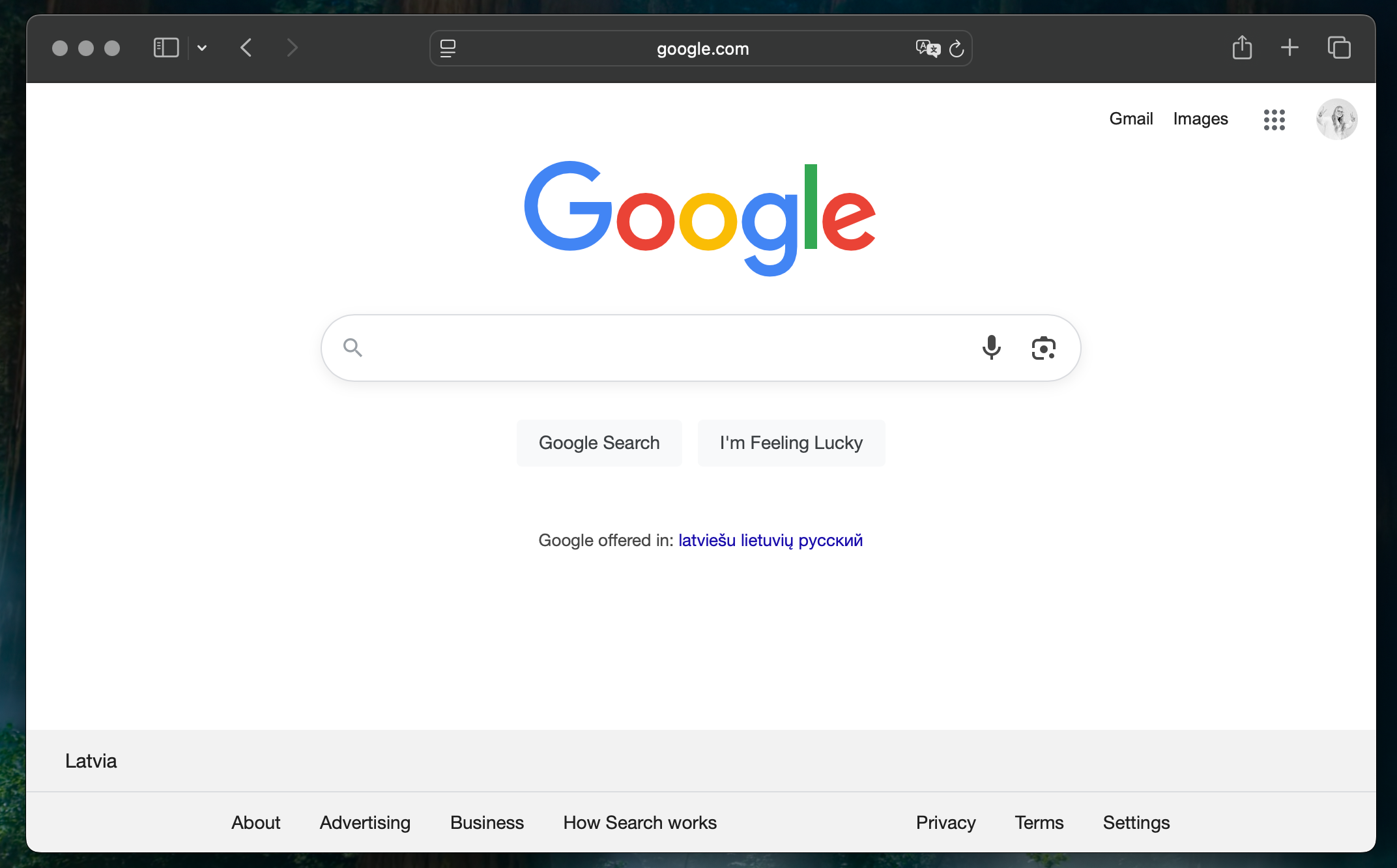
Visual interfaces that allow users to interact with applications through graphical elements such as windows, icons, menus, and pointers (WIMP).
Think of a GUI as the dashboard of a car. Just as a dashboard provides controls and information for driving, a GUI offers tools and feedback for interacting with software.
Command line interace (CLI)
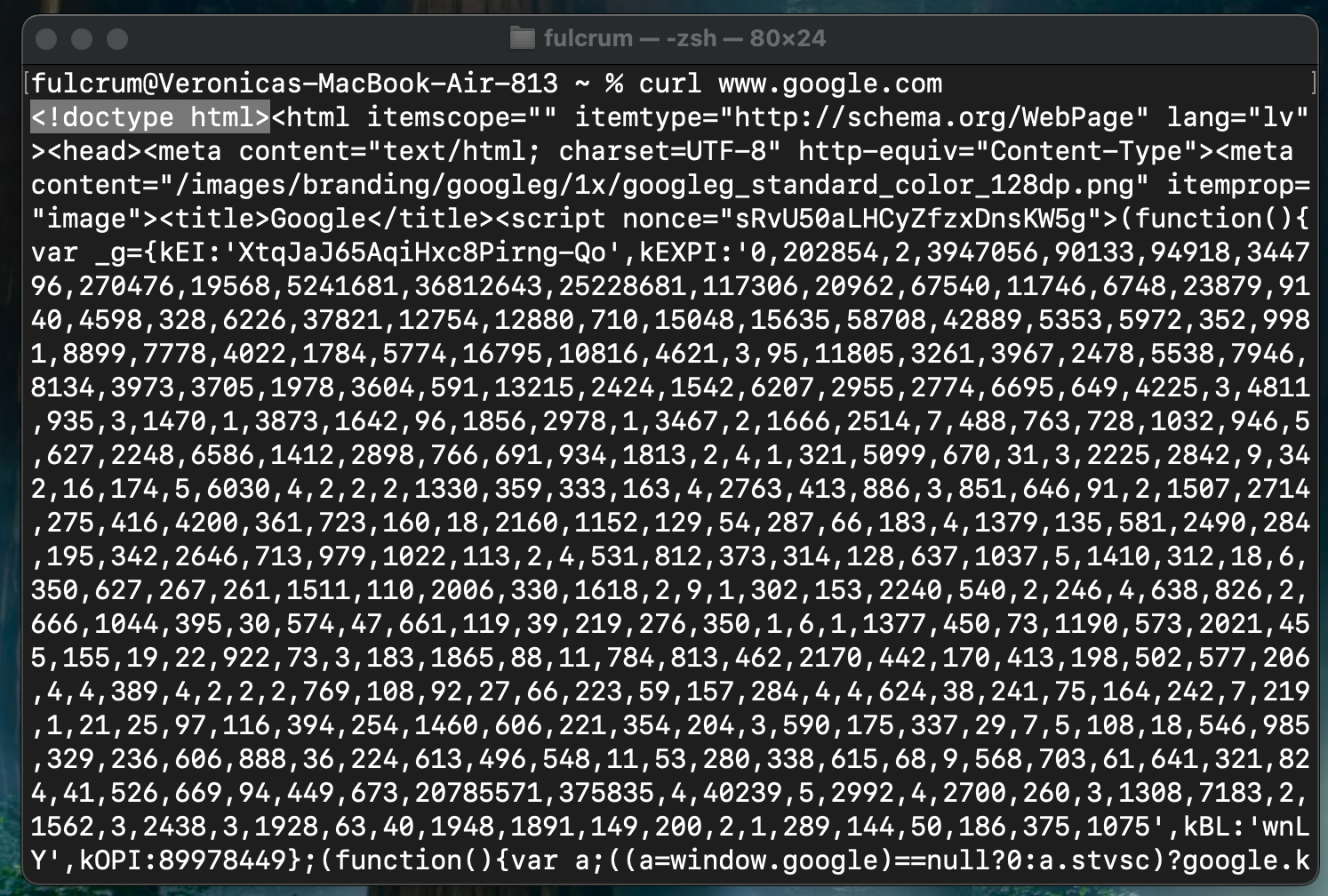
A text-based interface is used to interact with a computer. Users type commands to perform tasks instead of using a graphical interface with buttons and icons.
Here are examples with a CLI-based browser, cURL, and a GUI-based Safari.
More About GUIs
Why is the GUI Useful?
- Intuitiveness: Visual elements make applications more accessible to users with varying levels of technical expertise.
- Consistency: Standardised GUI elements create a familiar experience across different applications and operating systems.
- Direct Manipulation: Users can interact with elements directly (e.g., dragging and dropping files), enhancing engagement and efficiency.
Key GUI Elements
Some of the most common GUI elements include:
- Windows: Containers for application content, allowing users to view and interact with multiple tasks simultaneously.
- Icons: Visual representations of files, applications, or actions, providing intuitive access to features.
- Pointers: Used to navigate and interact with GUI elements, typically controlled by a mouse or touchpad.
GUIs are often described using the acronym WIMP:
- Windows
- Icons
- Menus
- Pointers
More GUI elements include:
Toolbars
Toolbars are graphical user interface (GUI) elements that provide quick access to frequently used commands and features.
They are typically located at the top of an application window and contain icons or buttons representing specific actions.
In a word processor, a toolbar might include buttons for bold, italic, underline, and text alignment.
Benefits of toolbars
- Efficiency: Toolbars reduce the need to navigate through menus, allowing users to perform actions with a single click.
- Consistency: Standardised icons (e.g., a floppy disk for "Save") help users quickly identify functions across different applications.
- Customisation: Many applications allow users to customise toolbars, adding or removing buttons to suit their workflow.
When designing a toolbar, prioritize the most frequently used functions to minimize clutter and enhance usability.
Menus
Menus are GUI elements that display a list of commands or options.
They are typically organised into categories, making it easy for users to find specific functions.
There are different types of menus you might find useful:
- Drop-down Menus: Appear when a user clicks on a menu title (e.g., "File," "Edit").
- Context Menus: Accessed by right-clicking, providing options relevant to the selected item.
- Submenus: Nested menus that offer additional options within a main menu.
A Filemenu might include options like New, Open, Save, and Print.
Benefits of Menus:
- Organisation: Menus group related commands, making it easier for users to navigate complex applications.
- Scalability: Submenus allow applications to offer a wide range of features without overwhelming the user.
- Accessibility: Keyboard shortcuts are often displayed alongside menu items, enhancing accessibility for power users.
- While menus provide a structured way to access commands, they can become cumbersome if overly nested.
- Strive for a balance between depth and simplicity.
Dialogue Boxes
Dialogue boxes are pop-up windows that prompt users to enter information, make decisions, or receive notifications.
They are essential for interactions that require user input or confirmation.
Types of Dialogue Boxes:
- Modal: Require the user to interact with the dialogue box before returning to the main application.
- Modeless: Allow users to continue interacting with the application while the dialogue box remains open.
A Save As dialogue box prompts users to choose a file name and location before saving a document.
Benefits of Dialogue Boxes:
- Clarity: Dialogue boxes provide clear instructions and options, reducing the likelihood of user errors.
- Focus: Modal dialogue boxes ensure that critical actions (e.g., confirming a delete operation) receive the user's full attention.
- Feedback: Dialogue boxes can display error messages or confirmations, keeping users informed about the application's status.
- Avoid overusing modal dialogue boxes, as they can disrupt the user's workflow.
- Use them only when necessary for critical interactions.
The Role of Operating Systems in GUI Design
Operating systems provide standardised GUI components, such as toolbars, menus, and dialogue boxes, allowing developers to focus on application-specific features.
- When a developer creates a menu in an application, the operating system handles the rendering and behaviour of the menu, ensuring consistency across all applications.
- For instance, the main menu (with File, Edit, etc. options) in MS Word on macOS provides the main menu above the application window.
Why is Standardisation Advantageous?
- Efficiency: Developers can leverage pre-built GUI components, reducing development time and effort.
- Usability: Users benefit from a consistent interface across applications, minimising the learning curve.
- Accessibility: Standardised components often include built-in accessibility features, such as keyboard navigation and screen reader support.
Common Types of Software Applications
Word Processors
Word processors
Software applications designed for creating, editing, and formatting text documents
They offer a wide range of features, including:
- Text formatting: Change fonts, sizes, and colours.
- Layout options: Adjust margins, spacing, and alignment.
- Collaboration tools: Track changes and add comments.
MSWord and Google Docs are popular examples of word processors.
Spreadsheets
Spreadsheets
Software applications that allow users to organise data in rows and columns
They are powerful tools for:
- Data analysis: Use formulas and functions to perform calculations.
- Visualisation: Create charts and graphs to represent data visually.
- Automation: Use macros to automate repetitive tasks.
Microsoft Excel and Google Sheets are widely used spreadsheet applications.
Database Management Systems (DBMS)
Database Management System (DBMS)
Software that creates, stores, retrieves, and manages data in one or more databases.
They allow users to:
- Create and modify databases: Define tables, fields, and relationships.
- Query data: Use SQL (Structured Query Language) to retrieve specific information.
- Ensure data integrity: Maintain consistency and accuracy of data.
MySQL and Microsoft Access are popular DBMS.
Email Applications
Email application
Software applications that enable users to send, receive, and manage digital messages
Key features include:
- Inbox organisation: Sort emails by folders, labels, or categories.
- Attachments: Send and receive files with emails.
- Integration: Connect with calendars and contacts.
Microsoft Outlook and Gmail are common email applications.
Web Browsers
Web browser
Software applications that allow users to access and navigate the World Wide Web
They provide:
- Rendering of web pages: Display HTML, CSS, and JavaScript content.
- Bookmarking: Save favourite websites for easy access.
- Extensions: Enhance functionality with add-ons and plugins.
Google Chrome, Mozilla Firefox, and Safari are popular web browsers.
Computer-Aided Design (CAD)
CAD software is used by engineers and designers to create detailed 2D and 3D models. Features include:
- Precision drawing: Tools for accurate measurements and scaling.
- Simulation: Test designs under various conditions.
- Collaboration: Share and review designs with team members.
AutoCAD and SolidWorks are leading CAD applications.
Graphic Processing Software
Graphic processing software allows users to manipulate and enhance images. Key capabilities include:
- Image editing: Crop, resize, and adjust colours.
- Layer management: Work with multiple layers for complex designs.
- Special effects: Apply filters and transformations.
Adobe Photoshop and GIMP are well-known graphic processing tools.
Ethical and Social Implications
The design of application features has ethical and social implications, particularly in terms of accessibility and inclusivity.
- Accessibility: Ensuring that applications are usable by people with disabilities is a critical aspect of ethical design.
- Inclusivity: Developers must consider diverse user needs and preferences, avoiding assumptions that may exclude certain groups.
- Privacy: Dialogue boxes and notifications should clearly communicate how user data is collected and used, promoting transparency and trust.
- When designing applications, consider the needs of all users, including those with disabilities.
- Prioritise accessibility features such as keyboard navigation, screen reader compatibility, and customizable interfaces.
- Can you identify the key features of a GUI in your favourite application?
- How do toolbars and menus enhance the usability of software?
- Why is standardisation important in GUI design?
How do advancements in application design reflect broader changes in technology and society? Consider the impact of mobile interfaces on how we interact with software.