Managing Processes to Deliver Value
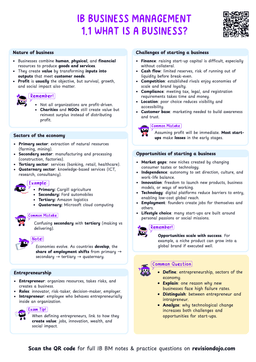
- Jojo is running a bakery.
- Jojo has flour, sugar, and eggs (inputs), and Jojo's goal is to produce delicious cakes (outputs).
- But it's not just about baking, it's about doing so efficiently and effectively to satisfy Jojo's customers and stay profitable.
What is Operations Management?
Operations management
Operations management is the process of overseeing the transformation of inputs (resources) into outputs (goods or services) in a way that maximizes efficiency and effectiveness.
It involves coordinating people, processes, and technology to create value for customers while achieving organizational goals.
Key Responsibilities of Operations Management
1. Ensuring Optimal Use of Resources
- Resource Allocation: Making sure that materials, labor, and equipment are used efficiently to minimize waste and reduce costs.
- Capacity Management: Balancing production capacity with demand to avoid overproduction or shortages.
- Sustainability: Implementing eco-friendly practices to reduce environmental impact and improve long-term efficiency.
A car manufacturer might use just-in-time inventory systems to ensure parts arrive exactly when needed, reducing storage costs.
Capacity management
The process of planning, monitoring, and optimizing the production capacity of a business to meet demand efficiently.
Sustainability
The practice of producing goods and services in a way that minimizes environmental impact, ensures social responsibility, and maintains economic viability for future generations.
- Think of resource optimization as getting the most value out of every dollar spent.
- This requires careful planning and continuous monitoring.
2. Maintaining Quality Standards
- Quality Control: Regularly inspecting products or services to ensure they meet predefined standards.
- Continuous Improvement: Using methodologies like Total Quality Management (TQM) or Six Sigma to enhance processes and reduce defects.
Quality control
A process used to ensure that products or services meet specified standards by identifying and correcting defects.
Total Quality Management (TQM)
A holistic approach to long-term success through customer satisfaction. It involves continuous improvement, employee involvement, and process optimization across all departments.
Six Sigma
A data-driven methodology focused on reducing defects and variability in processes to achieve near-perfect quality. It follows a structured approach called DMAIC (Define, Measure, Analyse, Improve, Control) to improve efficiency and eliminate errors.
A hotel chain might implement a feedback system to identify areas for improvement in customer service.
- Don't confuse quality control with quality assurance.
- Quality control focuses on detecting defects, while quality assurance is about preventing them.
3. Streamlining Production Processes to Meet Demand
- Process Design: Creating efficient workflows that minimize bottlenecks and reduce production time.
- Flexibility: Adapting processes to respond quickly to changes in demand or market conditions.
A clothing retailer might use data analytics to predict fashion trends and adjust production accordingly.
Process design
The strategic planning and structuring of workflows, resources, and activities to efficiently produce goods or services. It involves determining the most effective way to organize tasks, materials, equipment, and human resources to maximize productivity, minimize costs, and ensure quality.
- Streamlining processes often involves eliminating non-value-added activities.
- Ask yourself: Does this step contribute to the final product or service?
4. Balancing Cost Efficiency with Customer Satisfaction
- Cost Management: Reducing expenses without compromising quality or customer experience.
- Value Creation: Ensuring that products or services meet customer needs and preferences.
A smartphone manufacturer might invest in high-quality materials to enhance durability, even if it slightly increases production costs.
- Cost efficiency should never come at the expense of customer satisfaction.
- Happy customers are more likely to return and recommend your business.
Why is Operations Management Critical?
- Competitive Advantage: Efficient operations can lower costs, improve quality, and speed up delivery, giving businesses an edge over competitors.
- Customer Satisfaction: High-quality products and services that meet customer needs lead to repeat business and positive reviews.
- Sustainability: Effective resource management reduces waste and environmental impact, aligning with modern consumer expectations.
Competitive advantage
The unique attributes or capabilities that allow a business to outperform its competitors. It enables a company to offer superior value to customers, whether through lower costs, differentiated products, superior quality, brand reputation, or innovation.
- Consider Toyota, a leader in lean manufacturing.
- Its focus on efficiency and quality has made it one of the most successful car manufacturers globally.
Challenges in Operations Management
1. Managing Uncertainty
- Demand Fluctuations: Predicting customer demand can be challenging, leading to overproduction or stockouts.
- Supply Chain Disruptions: Natural disasters, political instability, or pandemics can disrupt the flow of materials.
The COVID-19 pandemic highlighted the vulnerability of global supply chains, forcing many businesses to rethink their strategies.
2. Balancing Cost and Quality
Reducing costs without sacrificing quality requires careful decision-making and a deep understanding of customer priorities.
Avoid the trap of cutting costs in areas that directly impact customer satisfaction, such as product durability or service responsiveness.
3. Adapting to Technological Changes
Rapid advancements in technology require businesses to continuously update their processes and systems to stay competitive.
Embrace a culture of innovation and continuous learning to keep pace with technological changes.
Practical Applications of Operations Management
1. Manufacturing
- Lean Production: Minimizing waste and maximizing efficiency through techniques like just-in-time inventory and kaizen (continuous improvement).
- Automation: Using robotics and AI to streamline repetitive tasks and improve precision.
Lean production
A manufacturing philosophy focused on minimizing waste (e.g., excess inventory, overproduction, and inefficiencies) while maximizing value for customers. It emphasizes continuous improvement, efficient workflows, and high-quality output using methods like Just-in-Time (JIT), Kaizen, and automation.
Just in Time inventory management
An inventory management strategy where materials and products are ordered and received only when needed for production, reducing storage costs and waste.
Kaizen
A Japanese management philosophy that focuses on small, continuous improvements in processes, products, and workplace culture. It encourages employee involvement, problem-solving, and incremental changes to enhance efficiency, quality, and overall business performance.
Tesla's Gigafactories use advanced automation to produce electric vehicles at scale, reducing production time and costs.
2. Service Industry
- Process Mapping: Identifying and optimizing each step in the service delivery process to enhance customer experience.
- Capacity Planning: Ensuring sufficient staff and resources are available during peak times to avoid delays.
Process mapping
A visual representation of a workflow that outlines the steps, inputs, and outputs of a process. It helps businesses identify inefficiencies, bottlenecks, and areas for improvement by providing a clear overview of how tasks are performed.
Capacity planning
The process of determining the production capacity needed to meet current and future demand efficiently.
Airlines use dynamic pricing and real-time data to manage seat availability and maximize revenue.
3. Retail
- Inventory Management: Balancing stock levels to meet customer demand without overstocking.
- Omnichannel Strategies: Integrating online and offline channels to provide a seamless shopping experience.
Omnichannel strategies
A seamless and integrated approach to sales, marketing, and customer service across multiple channels (e.g., physical stores, websites, mobile apps, social media, and call centers). The goal is to provide a consistent and personalized customer experience, allowing customers to switch between channels effortlessly.
Amazon's use of data analytics and automation in its warehouses enables fast and accurate order fulfillment.
Case Study: GreenTech Furniture Ltd.
GreenTech Furniture Ltd. (GTF) is a mid-sized manufacturer of eco-friendly office furniture. Established in 2015, the company prides itself on using sustainable raw materials, such as bamboo and recycled wood, to create high-quality products. GTF operates in a highly competitive market where customers demand both sustainability and affordability.
Recently, GTF has faced operational challenges, including:
- Rising production costs due to increased prices of sustainable materials.
- Supply chain disruptions caused by delays in raw material procurement.
- Quality control issues, leading to increased product defects and returns.
- Longer lead times, making it difficult to meet customer demand promptly.
To address these issues, GTF's management is considering adopting lean production techniques and investing in automation to enhance efficiency. However, some employees worry that automation might lead to job losses. The company must balance operational improvements with ethical considerations.
Questions:
- Explain the key functions of operations management in GreenTech Furniture Ltd. (4 marks)
- Analyse how lean production techniques could help GTF reduce costs and improve quality. (6 marks)
- Evaluate whether investing in automation would be a suitable long-term strategy for GTF, considering its commitment to sustainability and employee concerns. (10 marks)
Solution
Mark Scheme for GreenTech Furniture Ltd. Case Study
Question 1: Explain the key functions of operations management in GreenTech Furniture Ltd. (4 marks)
Award up to 4 marks for a well-structured explanation of operations management functions, such as:
- Production Planning & Scheduling: Ensuring efficient resource allocation and smooth workflow. (1 mark)
- Quality Control & Assurance: Monitoring production to reduce defects and improve customer satisfaction. (1 mark)
- Supply Chain Management: Sourcing raw materials efficiently and handling logistics. (1 mark)
- Efficiency & Cost Control: Managing costs, reducing waste, and improving productivity. (1 mark)
Full marks should be awarded for a clear, contextual explanation linking these functions to GTF’s challenges.
Question 2: Analyse how lean production techniques could help GTF reduce costs and improve quality. (6 marks)
Award marks based on:
- Definition of Lean Production: Explanation of how lean principles aim to minimize waste and maximize efficiency. (1 mark)
- Application of Lean Principles to GTF
- Just-in-Time (JIT) to reduce inventory holding costs and avoid raw material shortages. (1 mark)
- Kaizen (continuous improvement) to enhance quality and reduce defects. (1 mark)
- Reducing overproduction and defects to minimize costs. (1 mark)
- Streamlining workflow to reduce lead times and improve delivery. (1 mark)
- Analysis: How these techniques would positively impact cost reduction and quality improvement. (1 mark)
Full marks should be given if the response includes specific lean production methods and their direct impact on GTF.
Question 3: Evaluate whether investing in automation would be a suitable long-term strategy for GTF, considering its commitment to sustainability and employee concerns. (10 marks)
Marks should be awarded based on the depth of evaluation:
- Definition & Context (2 marks)
- Definition of automation in operations.
- Link to GTF’s current operational challenges.
- Benefits of Automation (3 marks)
- Increased efficiency and productivity.
- Reduction in production costs over time.
- Improved quality control and consistency.
- Potential Drawbacks (3 marks)
- High initial investment cost.
- Risk of job losses and employee resistance.
- Potential sustainability concerns (e.g., energy use of automated systems).
- Balanced Conclusion (2 marks)
- A justified recommendation on whether automation aligns with GTF’s long-term goals.
- Consideration of alternative solutions like partial automation or employee reskilling.
Full marks should be awarded for a balanced argument considering both advantages and drawbacks, leading to a justified conclusion.
- How does technology influence the balance between efficiency and quality in operations management?
- Consider the ethical implications of automation on employment.
- What are the key responsibilities of operations management?
- How does balancing cost efficiency with customer satisfaction create value for a business?
- Can you identify a real-world example of a company that excels in operations management? What strategies do they use?