Phenylketonuria Is A Genetic Disease Caused by a Recessive Allele
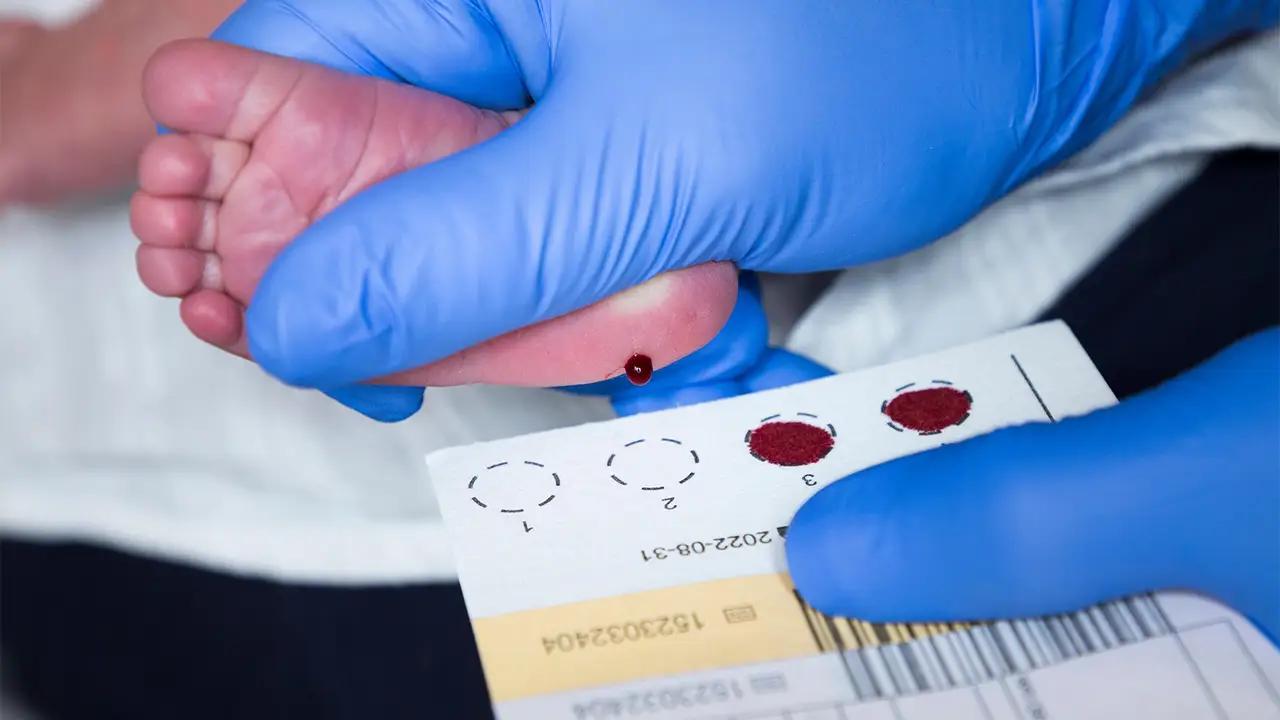
- When a newborn baby undergoes a routine heel-prick test,
- They are undergoing a simple test screening for phenylketonuria (PKU), a genetic disorder that, if untreated, can lead to severe intellectual disabilities.
- PKU is a classic example of a disease caused by a recessive allele.
PKU Is Caused by a Defective PAH Gene
- PKU arises from a mutation in the PAH gene, which encodes the enzyme phenylalanine hydroxylase (PAH).
- This enzyme converts phenylalanine (an amino acid found in many foods) into another amino acid, tyrosine.
Hint
Without functional PAH, phenylalanine accumulates to toxic levels, impairing brain development.
Recessive Inheritance Explains PKU’s Rarity
- PKU follows a recessive inheritance pattern:
- Carriers (Pp): Individuals with one normal and one defective allele produce enough functional enzyme to remain unaffected.
- Affected Individuals (pp): Symptoms only appear in individuals inheriting two defective alleles.
| P | p | |
|---|---|---|
| P | PP | Pp |
| p | Pp | pp |
Common Mistake
- Many students mistakenly think that carriers (Pp). show mild symptoms of PKU. This is incorrect.
- Carriers produce enough functional enzyme to remain completely unaffected.
Hint
Chance of Inheritance: Two carriers have a 25% chance of having an affected child (pp) and a 50% chance of producing carriers (Pp).
PKU Can Be Managed with Early Intervention
- Newborn screening ensures early diagnosis, allowing immediate dietary adjustments to prevent symptoms.
- Low-Phenylalanine Diet
- To manage PKU, affected individuals must avoid high-phenylalanine foods, such as: Meat, Dairy, Nuts
Example
A child diagnosed with PKU avoids restricted foods and consumes specialized formulas to maintain normal development.
Theory of Knowledge
How does the availability of genetic screening and dietary management for PKU raise ethical questions about genetic testing and healthcare access?
PKU Highlights Key Genetic Principles
- Recessive Inheritance: PKU only manifests in individuals with two defective alleles.
- Gene-Environment Interaction: Symptoms can be prevented by controlling phenylalanine intake.
- Autosomal Inheritance: PKU affects males and females equally since the PAH gene is on a non-sex chromosome.
Theory of Knowledge
In what ways does the study of PKU connect to broader questions in biology, such as the role of nature versus nurture in determining traits?