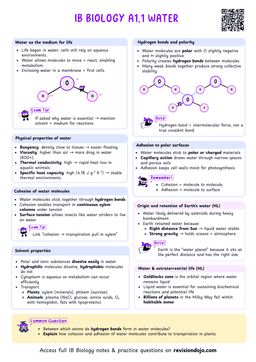
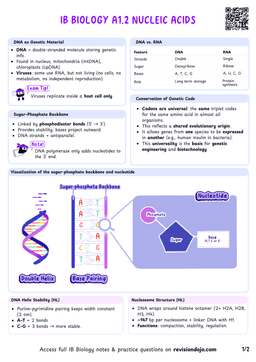
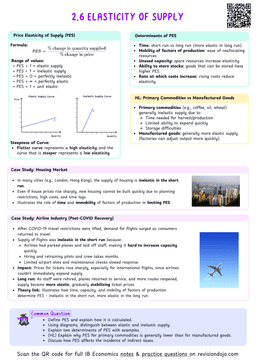
Solute and Pressure Potential Changes When Plant Cells Are Bathed in Different Solutions
- Recall the principles of water potential: water moves from areas of higher potential energy to areas of lower potential energy.
- This movement is driven by two key factors: solute potential and pressure potential.
- When plant tissue interacts with different solutions, these factors determine whether water enters or exits the cells and the effects can be dramatic.
Solute potential
Solute potential ($\psi_s$) measures how solutes affect water's potential energy.
Pressure potential
Pressure potential ($\psi_p$) reflects the physical pressure exerted on water.
Plant Tissue in Hypotonic Solutions
What Is a Hypotonic Solution?
- When plant tissue is placed in a hypotonic solution, water moves into the cells by osmosis.
Hypotonic
A solution with a lower solute concentration compared to another solution.
Turgor pressure is essential for maintaining the rigidity of plant tissues, helping them stand upright.
What Happens to Plant Cells?
- Water movement: Water enters the cell because the water potential of the solution is higher than the water potential inside the cell.
- Turgor pressure: As water fills the central vacuole, pressure builds inside the cell. This is called turgor pressure, and it pushes the plasma membrane tightly against the cell wall.
- Result: The cell becomes turgid and firm. Turgor pressure supports plant structure and keeps stems and leaves upright.
Equilibrium in Hypotonic Solutions
- Water continues to enter the cell until the water potential inside the cell equals that of the surrounding solution.
- At this point, there is no net movement of water.
Plants thrive in hypotonic environments, as turgor pressure is essential for growth and structural support.
Plant Tissue in Hypertonic Solutions
What Is a Hypertonic Solution?
- When plant tissue is placed in a hypertonic solution, water moves out of the cells.
Hypertonic
A solution with a higher solute concentration compared to another solution.
What Happens to Plant Cells?
- Water movement: Water leaves the cell because the water potential of the solution is lower than that inside the cell.
- Plasmolysis: As water exits, the central vacuole shrinks, and the plasma membrane pulls away from the cell wall. This process is called plasmolysis.
- Result: The cell becomes flaccid and may eventually die if the water loss is too severe.
If water loss continues, the plasma membrane may pull away from the cell wall, a process called plasmolysis.
Equilibrium in Hypertonic Solutions
- Water continues to leave the cell until the water potential inside the cell equals that of the surrounding solution.
- At this point, there is no net movement of water.
- Don't confuse turgid with plasmolyzed.
- Turgid cells are swollen and firm.
- Plasmolyzed cells are shrunken and the membrane detaches from the wall.
Why Does This Matter?
Understanding water potential and osmosis is crucial for explaining:
- Plant health: Turgor pressure keeps plants upright, while plasmolysis can lead to wilting and cell death.
- Water uptake: Root cells absorb water from the soil because their water potential is lower than that of the surrounding soil.
- Real-world applications: Farmers use this knowledge to prevent crop damage from saline soils or drought conditions.
- How might the concept of water potential apply to other fields, such as medicine or environmental science?
- Can you think of parallels between water movement in plants and fluid balance in the human body?