Chemoreceptors Regulate Ventilation Rate Through Feedback Control
- The ventilation rate (breathing rate) is tightly regulated by a feedback mechanism that ensures the body maintains proper levels of oxygen (O₂), carbon dioxide (CO₂), and blood pH.
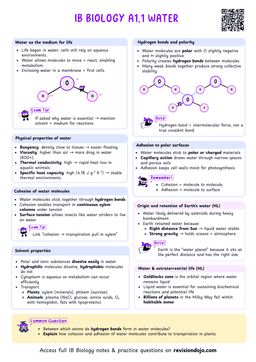
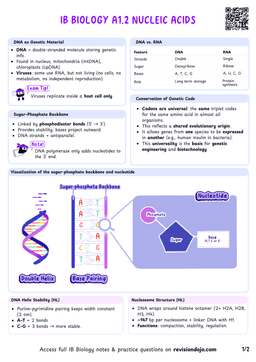
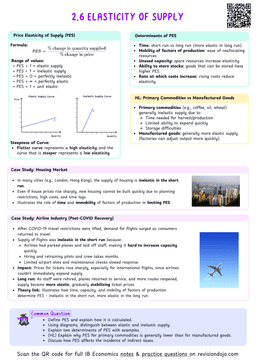
- This control system relies on chemoreceptors that detect changes in blood chemistry and send signals to the respiratory centers in the brainstem, which then adjust breathing rate and depth by stimulating the diaphragm and intercostal muscles.
Definition
pH
pH is a measure of how acidic or basic a solution is, ranging from 0 (very acidic) to 14 (very basic).
Note
Blood pH is tightly regulated between 7.35 and 7.45.
Why Does Blood pH Change?
- Carbon Dioxide and pH
- During cellular respiration, cells produce carbon dioxide ($CO_2$) as a waste product.
- When $CO_2$ dissolves in blood, it forms carbonic acid ($H_2CO_3$), which releases hydrogen ions ($H^+$), lowering pH and making the blood more acidic.
- Exercise and Increased $CO_2$
- During exercise, muscles work harder and produce more $CO_2$.
- This increases acidity, potentially disrupting the optimal pH range.
Hint
Central chemoreceptors are more sensitive to $CO_2$ changes, while peripheral chemoreceptors also monitor oxygen levels.
Location of Chemoreceptors
- Central chemoreceptors (major role)
- Located in the medulla oblongata (brainstem)
- Detect changes in blood pH by sensing CO₂ levels in cerebrospinal fluid (CSF)
- Peripheral chemoreceptors (secondary role)
- Located in the carotid bodies (near carotid arteries) and aortic bodies (near aortic arch)
- Detect O₂, CO₂, and pH levels in arterial blood
The Role of Muscles in Ventilation
- Diaphragm: Contracts to expand the chest cavity, drawing air into the lungs.
- Intercostal Muscles: External intercostal muscles lift the ribcage during inhalation. Internal intercostal muscles help with forced exhalation during intense activity.
The Feedback Loop: How Ventilation is Controlled
- Detection
- Increased $CO_2$ lowers blood pH.
- Chemoreceptors detect this change and send signals to the respiratory centers in the brainstem.
- Response
- The brainstem sends nerve signals to the diaphragm and intercostal muscles.
- These muscles contract more frequently, increasing the ventilation rate (breathing rate).
- Correction
- Increased ventilation expels more $CO_2$, reducing acidity and restoring normal pH.
- Negative Feedback
- Once pH returns to normal, chemoreceptors reduce their signals, slowing the ventilation rate.
Analogy
- Think of this system as a thermostat.
- When the temperature (pH) drops, the heater (ventilation) turns on to restore balance.
- Once the desired temperature is reached, the heater turns off.
Control of Ventilation
Note
Normal exhalation is passive, but during exercise, the internal intercostal and abdominal muscles actively contract to expel more air.
Backup Mechanism: Oxygen Monitoring
- While $CO_2$ is the primary driver of ventilation changes, low oxygen levels (hypoxia) can also trigger an increase in breathing rate.
- Peripheral chemoreceptors in the carotid arteries detect low oxygen and send signals to the brainstem, overriding $CO_2$ signals if necessary.
Common Mistake
- Don’t confuse the roles of central and peripheral chemoreceptors.
- Central chemoreceptors focus on $CO_2$ and pH, while peripheral chemoreceptors monitor both $CO_2$ and oxygen levels.
Why This Matters
- Homeostasis: Maintaining blood pH is critical for enzyme function and overall cellular health.
- Adaptability: The feedback system allows your body to adjust to varying demands, such as exercise or high-altitude environments.
- Survival: Without this regulation, blood pH could drop to dangerous levels, leading to acidosis and impaired organ function.
Theory of Knowledge
How does the integration of the nervous and muscular systems in regulating ventilation reflect the concept of emergent properties in biology?